


Rice will play a central role at the World Economic Forum Annual Meeting in Davos, Switzerland, anchoring signature Bloomberg House programming that spotlights how research universities, cities and states are translating innovation, talent and investment into durable social and economic returns.
Held under the theme A Spirit of Dialogue, the 2026 meeting will take place Jan. 19-23 and centers on five core global challenges: cooperation in a more contested world; unlocking new sources of growth; investing in people; deploying innovation responsibly at scale; and building prosperity within planetary boundaries. Rice’s participation reflects the university’s growing role as a next-generation global research institution — one that pairs bold discovery with place-based partnerships to deliver solutions that scale.
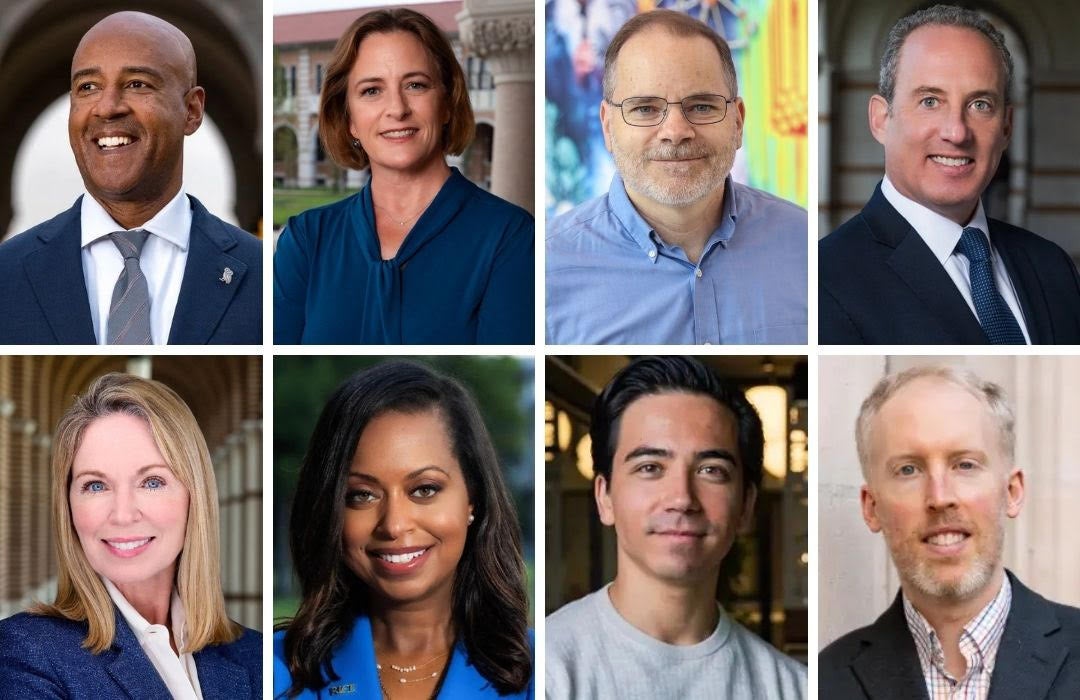
Rice delegation:
- Reginald DesRoches, president — Structural engineer and nationally recognized leader in infrastructure resilience, sustainability and higher education strategy.
- Amy Dittmar, the Howard R. Hughes Provost and executive vice president for academic affairs — Economist and expert on governance, strategic financial decision-making and higher education leadership.
- David Sholl, executive vice president for research — International authority on clean energy, scientific leadership and research strategy overseeing Rice’s global research enterprise.
- Stephen Bayer, vice president for development and alumni relations — Nationally recognized expert in higher education advancement strategy and execution.
- Caroline Levander, vice president for global strategy — Expert in global higher education partnerships, degree innovation and international research collaboration; author of “Invent Ed: How an American Tradition of Innovation Can Transform College Today.”
- Melinda Spaulding Chevalier, vice president for public affairs — Emmy Award-winning communicator specializing in brand strategy, crisis communications and community engagement.
- Adrian Trömel, interim vice president for innovation and chief innovation officer — Specialist in venture creation, innovation finance and university-affiliated investment strategies.
- Harris Eyre, the Harry Z. Yan and Weiman Gao Senior Fellow for Brain Health and Society, Baker Institute for Public Policy, and senior adviser for neuroscience, Office of Innovation — Physician-neuroscientist and entrepreneur leading national efforts in brain health, the emerging brain economy and translational innovation.
“Rice is redefining what it means to be a world-class research university — rooted in a great global city and focused on solutions that improve lives locally and globally,” DesRoches said. “As the world confronts economic uncertainty, technological disruption and growing social complexity, Rice brings a model that connects research, cities and people in ways that deliver real-world solutions.”
Through a partnership with Bloomberg, DesRoches will also lead a critical discussion on how universities shape future cities through enhancement of economic mobility and community resilience and attract investment by translating ideas, talent and capital into measurable growth.
Dittmar will moderate a conversation with private-sector leaders focused on accelerating translational research, examining how universities and industry can reduce friction between discovery and deployment and the importance of translating discovery into policy, investment and solutions. The discussion will highlight Rice’s global health work — including neonatal innovations deployed in Africa — as proof points for faster, more scalable impact.
She said Rice’s global engagement reflects the university’s focus on accelerating the movement of research to impact.
“At Rice, we are focused on accelerating the journey from lab to life,” Dittmar said. “Whether we are advancing health innovations abroad or building partnerships here in Houston, our goal is to deliver knowledge that strengthens cities, expands opportunity and invests in human well-being. Davos offers an important platform to collaborate with global partners who share that vision.”
Advancing brain health
As governments, investors and health systems increasingly recognize brain health as an economic imperative, the focus is shifting from vision to execution. Dittmar will moderate a panel discussion exploring how to implement a brain economy strategy by translating evidence into policy, investment and measurable outcomes. Panelists will examine how public and private actors can align data, capital and workforce strategies to strengthen brain capital at national and regional levels and how these approaches can be operationalized to deliver sustained economic and societal impact.
The discussion will be anchored by the release of the World Economic Forum brain economy report, “The Human Advantage: Stronger Brains in the Age of AI,” developed through the Brain Economy Action Forum in collaboration with the McKinsey Health Institute, with key contributions from Eyre.
Rice will also formally launch the Global Brain Economy Initiative, an effort aimed at strengthening brain health as a foundation for long-term economic growth. The initiative is projected to help boost the global economy by as much as $6.2 trillion by 2050. Eyre will also take part in a series of high-level dialogues on brain health, mental health and healthy aging, exploring the economic and societal consequences of cognitive health across the lifespan.
Throughout the week, the entire Rice leadership team will engage in cross-sector discussions focused on global research strategy, international partnerships, innovation ecosystems and public-private collaboration, strengthening the university’s relationships with institutions and organizations working to scale solutions in health, climate and sustainable cities. Sholl will participate in an MIT AI hackathon with other higher education and industry leaders.
Global impact
Guided by its Momentous strategic plan, Rice is advancing a bold vision to deliver global impact through a personalized, student-centered approach — positioning the university to become the world’s premier institution for teaching and research while redefining what it means to be elite by expanding access and opportunity. Through The Rice Investment, the university’s free tuition program, Rice is growing enrollment and widening pathways to a Rice education.
Among the fastest-growing top-ranked universities in the nation, Rice is uniquely positioned in Houston — the energy capital of the world and home to the nation’s third-largest concentration of Fortune 500 companies and the Texas Medical Center — offering unparalleled opportunities for collaboration, innovation and global impact.
“Rice’s engagement in Davos underscores a broader strategy to position the university as the model global research institution — one that not only generates knowledge but also delivers measurable public impact,” DesRoches said. “From advancing climate-resilient cities and sustainable infrastructure to leading the science of brain health and translational medical innovation, Rice combines bold research with deep local partnerships to address global challenges at a human scale."
Learn more about Rice’s trip to Davos at https://rice.edu/davos.