

The Moody Center for the Arts at Rice University opens its spring exhibition “Imaging after Photography” Jan. 23, featuring work by seven contemporary artists who draw from the history of photography to explore how emerging technologies are pushing the boundaries of authorship, identity and speculative futures. Running through May 9, the show arrives during a moment of heightened concern for the responsible use of generative artificial intelligence and coincides with the 40th anniversary of FotoFest, the international photography biennial hosted in Houston. At the national and local level, “Imaging after Photography” prompts critical questions that both artists and scientists from Houston and beyond can help explore.
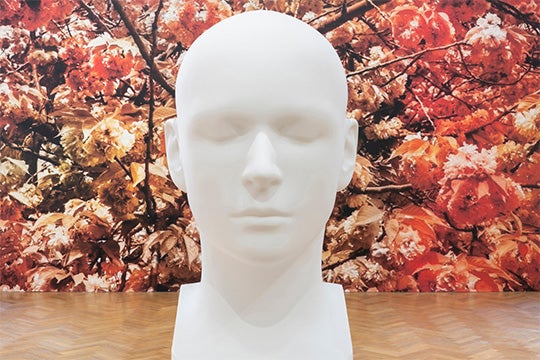
“There are few topics as urgent as artificial intelligence and its impact on all facets of society,” said Alison Weaver, co-curator and Suzanne Deal Booth Executive Director of the Moody. “Through this presentation of works by some of today’s most thoughtful and visionary artists, we hope to inspire dialogue about the influence of new technologies on the images that populate our daily lives and shape our visual culture.”
Highlighting research-based artists that topically approach AI with varying degrees of optimism, skepticism and creative constraint, the core of “Imaging after Photography” is an interrogation into the medium’s past, present and future. The works on view span from 2016 to the present and reflect a wide range of concerns from critical examinations of algorithmic bias to speculative experiments that reimagine natural systems, historical archives and photographic authorship.
The exhibition includes works by Nouf Aljowaysir, Refik Anadol, Grégory Chatonsky, Sofia Crespo, Joan Fontcuberta, Lisa Oppenheim and Trevor Paglen. Together, the artists probe how machine vision systems classify, distort and reproduce images, often revealing the cultural assumptions embedded within datasets and algorithms.
Paglen’s work anchors the exhibition with several major pieces shown in Texas for the first time. His projects examine the politics of images and the largely invisible technological infrastructures that structure contemporary life, including facial recognition systems and massive image databases used to train AI models.
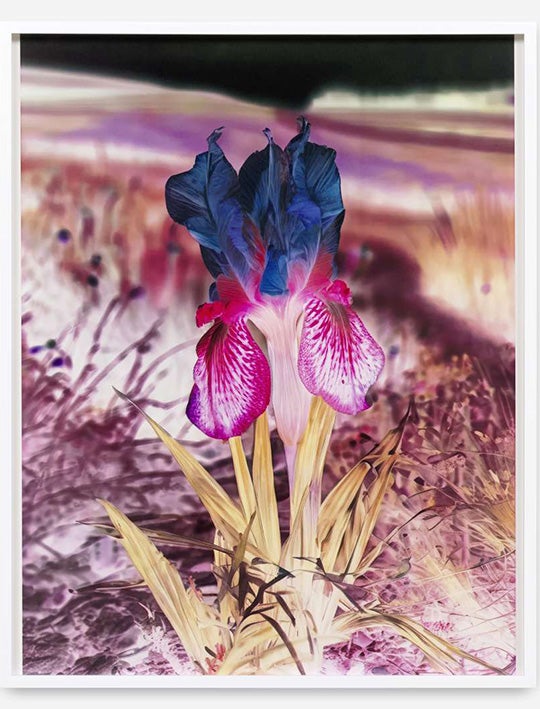
Other artists approach AI through historical inquiry and speculative reconstruction. Oppenheim uses machine learning to generate images of an extinct iris variety named after photographer Edward Steichen, while Crespo draws on 19th-century cyanotypes to explore how neural networks reinterpret biological forms. Fontcuberta blends analog photography with AI-generated imagery to challenge viewers’ ability to distinguish between the natural and the synthetic.
The exhibition reflects Rice’s broader commitment to ethical inquiry around emerging technologies. Responsible AI is a central catalyst of Momentous, Rice’s 10-year strategic plan, which emphasizes the need to examine not only what new technologies can do but how they shape society, culture and human experience. By approaching AI through the lens of contemporary art and photography, “Imaging after Photography” offers a space for critical reflection that aligns with the university’s emphasis on interdisciplinary engagement and responsible innovation.
Curated by Weaver and Noor Alé, associate curator at the Moody, the exhibition is designed by world: Alejandro Stein and Frank J. Mondragón. In addition to the gallery presentation, “Imaging After Photography” will be accompanied by public programs, including a Jan. 23 opening reception, a spring symposium focused on AI and visual culture and interdisciplinary performances connecting art, music and movement.