Eden King, the Lynnette S. Autry Professor of Psychological Sciences at Rice, has been named a member of the Society for Human Resource Management's Blue Ribbon Commission on Racial Equity, which aims to improve racial equity in the workplace.
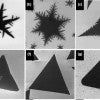
Materials scientists at Rice University and the University of Pennsylvania are calling for a collective, global effort to fast-track the mass production of 2D materials like graphene and molybdenum disulfide.
Researchers at Rice University have discovered details about a novel type of polarized light-matter interaction with light that literally turns end over end as it propagates from a source.
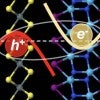
Mixing and matching computational models of 2D materials led scientists at Rice University to the realization that excitons can be manipulated in new and useful ways.
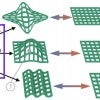
Soft robots and biomedical implants that reconfigure themselves upon demand are closer to reality with a method developed at Rice to print shapeshifting materials.
Eggs that would otherwise be wasted can be used as the base of an inexpensive coating to protect fruits and vegetables, according to Rice University researchers.
Rice University researchers capture the first video of boron nitride nanotubes in motion to prove their potential for materials and medical applications.
The Hertz Fellowship is as prestigious as it is selective: Only 16 fellows each year are admitted to the program, which funds five years of graduate research and offers lifelong professional support through the Fannie and John Hertz Foundation.
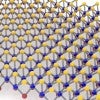
A 2D platform of molybdenum, sulfur and selenium is adept at detecting biomolecules via surface-enhanced Raman spectroscopy. Its nonmetallic nature helps by curtailing background noise.
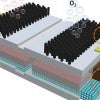
Rice University researchers have integrated high-efficiency solar cells and electrode catalysts into an efficient, low-cost device that splits water to produce hydrogen fuel.