Body
Body
Shield
Rice University News and Media Relations Office of Public Affairs

Main Nav

Materials Science and NanoEngineering

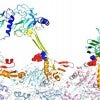
Scientists at Rice University and the University of Texas Health Science Center at Houston (UTHealth) uncovered new clues in the protein CPEB3 as part of their dogged pursuit of the mechanism that allows humans to have long-term memories. Researchers at Rice University modeled the binding structures of actin and associated proteins they believe are responsible for the formation of longterm memory. Here, the beta hairpin form of zipper sequence is a potential core for the formation of intramolecular beta she

Protein ‘chameleon’ colors long-term memory

August 24, 2020

Researchers model the binding structures of actin and associated proteins they believe are responsible for the formation of longterm memory.
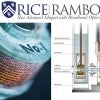
A photo and infographic of the RAMBO system

Rice’s RAMBO-II: A sequel better than the original

August 24, 2020

First-of-its-kind spectrometer is getting stronger magnets, wider range of lasers.
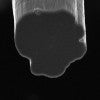
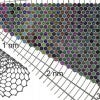
The cross-section of a fiber produced at Rice University contains tens of millions of carbon nanotubes. The lab continually improves its method to make fibers, which tests show are now stronger than Kevlar. Courtesy of the Pasquali Research Group

No limit yet for carbon nanotube fibers

August 17, 2020

Rice University researchers report advances in their quest to make the best carbon nanotube fibers for industry.

PPP

People, papers and presentations Aug 10, 2021

August 10, 2020

Eden King, the Lynnette S. Autry Professor of Psychological Sciences at Rice, has been named a member of the Society for Human Resource Management's Blue Ribbon Commission on Racial Equity, which aims to improve racial equity in the workplace.

Martí named fellow of the Royal Society of Chemistry

August 6, 2020

crystal shapes of 2D transition metal dichalcogenides as imaged with a scanning electron microscope

Study: Mapping crystal shapes could fast-track 2D materials

July 27, 2020

Materials scientists at Rice University and the University of Pennsylvania are calling for a collective, global effort to fast-track the mass production of 2D materials like graphene and molybdenum disulfide.

Ming Tang

Rice lab helps power electric car research

July 16, 2020

Rice University researchers will contribute to a new project to make better batteries for electric vehicles.

A model by Rice University scientists shows how two positively charged spheres attached to springs are attracted to the electric field of light. Due to the motion of the spheres, the spring system scatters light at different energies when irradiated with clockwise and anticlockwise trochoidal waves. (Credit: Link Research Group/Rice University)

Cartwheeling light reveals new optical phenomenon

June 29, 2020

Researchers at Rice University have discovered details about a novel type of polarized light-matter interaction with light that literally turns end over end as it propagates from a source.

Rice University physicists discover that plasmonic metals can be prompted to produce “hot carriers” that in turn emit unexpectedly bright light in nanoscale gaps between electrodes. The phenomenon could be useful for photocatalysis, quantum optics and optoelectronics. (Credit: Illustration by Longji Cui and Yunxuan Zhu/Rice University)

Rice lab’s bright idea is pure gold

June 29, 2020

Physicists discover plasmonic metals can produce “hot carriers” that emit unexpectedly bright light in nanoscale gaps between electrodes.

Rice scientists found certain combinations of weakly bound 2D materials let holes and electrons combine into excitons at the materials’ ground state. Courtesy of the Yakobson Research Group

Excitons form superfluid in certain 2D combos

June 15, 2020

Mixing and matching computational models of 2D materials led scientists at Rice University to the realization that excitons can be manipulated in new and useful ways.

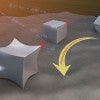
A graphic shows the process by which a Rice University lab uses 3D printing to make shapeshifting materials that may be useful to make soft robots or as biomedical implants. (Credit: Verduzco Laboratory/Rice University)

Lab makes 4D printing more practical

June 9, 2020

Soft robots and biomedical implants that reconfigure themselves upon demand are closer to reality with a method developed at Rice to print shapeshifting materials.

A coating developed at Rice University made primarily with protein from eggs that would otherwise be wasted can be used to extend the freshness of produce. (Credit: Jeff Fitlow/Rice University)

Egg-based coating preserves fresh produce

June 4, 2020

Eggs that would otherwise be wasted can be used as the base of an inexpensive coating to protect fruits and vegetables, according to Rice University researchers.

Rice University scientists analyzed the motion of single boron nitride nanotubes. The nanotubes are stable semiconductors and excellent conductors of heat. They could be useful as building blocks for composite materials or in biomedical studies. (Credit: Jeff Fitlow/Rice University)

Exotic nanotubes move in less mysterious ways

June 2, 2020

Rice University researchers capture the first video of boron nitride nanotubes in motion to prove their potential for materials and medical applications.

2020 Hertz Fellows

Three Rice students receive Hertz Fellowships

June 1, 2020

The Hertz Fellowship is as prestigious as it is selective: Only 16 fellows each year are admitted to the program, which funds five years of graduate research and offers lifelong professional support through the Fannie and John Hertz Foundation.

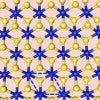
Monolayer Janus MoSSe, a compound of molybdenum, sulfur and selenium developed at Rice University, is adept at detecting biomolecules via surface-enhanced Raman spectroscopy. Its nonmetallic nature helps by curtailing background noise in the signal. (Credit: Lou Group/Rice University)

2D sandwich sees molecules with clarity

May 14, 2020

A 2D platform of molybdenum, sulfur and selenium is adept at detecting biomolecules via surface-enhanced Raman spectroscopy. Its nonmetallic nature helps by curtailing background noise.

Pagination

  • First page « First
  • Previous page ‹ Previous
  • …
  • Page 16
  • Page 17
  • Current page 18
  • Page 19
  • Page 20
  • Next page Next ›
  • Last page Last »
Body
Current Featured Releases Alerts Dateline Contact BACK TO TOP

6100 Main St., Houston, TX 77005-1827 |

Mailing Address: P.O. Box 1892, Houston, TX 77251-1892 |

713-348-0000 | Privacy Policy | Campus Carry

Body