

Odd angles make for strong spin-spin coupling
HOUSTON – (May 25, 2021) – Sometimes things are a little out of whack, and it turns out to be exactly what you need.
Odd angles make for strong spin-spin coupling
HOUSTON – (May 25, 2021) – Sometimes things are a little out of whack, and it turns out to be exactly what you need.

Sickle cell advance incorporates Rice lab's tech
Rice University bioengineer Gang Bao, a pioneer in the search for a way to treat and perhaps cure sickle cell disease, is co-author of a significant step forward revealed in Science Translational Medicine and led by his colleagues at Stanford University.

Rice lab peers inside 2D crystal synthesis
Scientific studies describing the most basic processes often have the greatest impact in the long run. A new work by Rice University engineers could be one such, and it’s a gas, gas, gas for nanomaterials.
Absorbent aerogels show some muscle
A simple chemical process developed at Rice University creates light and highly absorbent aerogels that can take a beating.
Hexagonal boron nitride's remarkable toughness unmasked
It's official: Hexagonal boron nitride (h-BN) is the iron man of 2D materials, so resistant to cracking that it defies a century-old theoretical description engineers still use to measure toughness.

In graphene process, resistance is useful
Lab uses laser-induced graphene process to create micron-scale patterns in photoresist for consumer electronics and more.
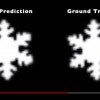
Neural nets used to rethink material design
The microscopic structures and properties of materials are intimately linked, and customizing them is a challenge. Rice University engineers are determined to simplify the process through machine learning.

Rice names architect for new engineering and science building
With the imminent demolition of Rice University’s Abercrombie Engineering Laboratory, the space will soon be cleared for a new engineering and science building, according to Rice administrators. International architecture firm Skidmore, Owings & Merrill (SOM) has been selected as lead architect for the new building. Houston’s Scientia Architects will consult on laboratory design.

Tires turned into graphene that makes stronger concrete
Rice scientists optimize a process to turn rubber from discarded tires into soluble graphene.

Seven research teams win Carbon Hub funding
Carbon Hub, Rice University's zero-emissions research initiative, has awarded seed grants for seven projects that will rapidly advance its vision for transforming the oil and gas sector into a leading provider of both clean hydrogen energy and solid carbon products that can be used in place of materials with large carbon footprints.

Theory could accelerate push for spintronic devices
A theory by Rice scientists could boost spintronics, a key to creating faster and more powerful electronic devices, including quantum computers.

Kennedy Institute adds data scientist for COVID-19 research
Rice's Ken Kennedy Institute is collaborating with the University of Texas MD Anderson Cancer Center on data science research into long-term outcomes and improved treatment methods for COVID-19.

Luminescent windows generate energy from inside and out
Rice engineers design and build windowpanes that redirect sunlight or illumination from indoors to edge-band solar cells.

‘Defective’ carbon simplifies hydrogen peroxide production
Rice scientists introduce a new catalyst to reduce oxygen to widely used hydrogen peroxide.

Research could dramatically lower cost of electron sources
Rice University engineers have discovered technology that could slash the cost of semiconductor electron sources, key components in devices ranging from night-vision goggles and low-light cameras to electron microscopes and particle accelerators.