
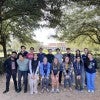
Rice students advance to finals of DOE’s Collegiate Wind Competition
An interdisciplinary group of Rice University students has been selected to compete in the Phase 3 final round of the U.S. Department of Energy’s 2024 Collegiate Wind Competition.
Rice students advance to finals of DOE’s Collegiate Wind Competition
An interdisciplinary group of Rice University students has been selected to compete in the Phase 3 final round of the U.S. Department of Energy’s 2024 Collegiate Wind Competition.
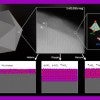
Aluminum nanoparticles make tunable green catalysts
The Rice lab of nanotechnology pioneer Naomi Halas has uncovered a transformative approach to harnessing the catalytic power of aluminum nanoparticles by annealing them in various gas atmospheres at high temperatures.

Rice’s Nai-Hui Chia wins NSF CAREER Award
Rice computer scientist Nai-Hui Chia has won a National Science Foundation CAREER Award to develop a new theoretical framework to facilitate the development of efficient quantum algorithms for a range of problems in quantum physics and computer science as well as enhance the security of quantum cryptography.

Gabe Baker’s life looks very different than it did a decade ago as a recently graduated Rice football star and environmental engineer working in county government in Houston. Now the former standout Rice student and athlete has embraced a successful music career in Nashville, Tennessee.
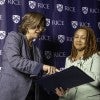
Texas state Rep. Ann Johnson honors Rice faculty, researchers and alumni with proclamations
Texas state Rep. Ann Johnson, whose legislative district includes Rice University, visited campus Feb. 29 to present resolutions from the 88th Texas Legislative session to Rice faculty, researchers and alumni.

Rice360’s co-directors to speak at SXSW
Rice360 Institute for Global Health Technologies co-directors Rebecca Richards-Kortum and Maria Oden will speak at the upcoming South by Southwest Conference in Austin March 8.
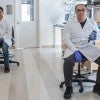
Faster and simpler point-of-care malaria test developed by Rice researchers
Rice University researchers have developed a rapid, accurate test for diagnosing malaria that is significantly faster and easier to use than traditional tests. The advancement has the potential to improve patient outcomes, especially in rural regions with limited health care resources.

Data-processing tool could enable better early stage cancer detection
A team of Rice researchers has developed a tool that is better at integrating single-cell DNA and RNA data than more recent, state-of-the-art technologies. The findings could lead to better early stage cancer detection.

Rice’s Angela Wilkins named to Texas’ Artificial Intelligence Advisory Council
Angela Wilkins, executive director of Rice’s Ken Kennedy Institute, is one of four members appointed to the Texas Artificial Intelligence (AI) Advisory Council, which studies and monitors AI systems developed, employed or procured by state agencies.

The centers are the Rice Center for Nanoscale Imaging Sciences, Synthesis X Center, Center for Environmental Studies, Center for Latin American and Latinx Studies, and Center for Coastal Futures and Adaptive Resilience.

Advancing materials science, Rice professors examine chirality in nearly 2D
Hanyu Zhu and Boris Yakobson shared their perspective on chirality in 2D materials in Nature Materials.
Rice researcher using statistics to shed light on the untold story of Africa’s Lake Chad Basin
Lake Chad, a large, shallow body of freshwater in North Central Africa, is vitally important to the livelihood of tens of millions of people living in the semi-arid, remote and impoverished region. Over the decades, the area’s inhabitants have adapted to extreme conditions affecting their water resources.

Rice joins federal consortium on AI safety
Rice has joined the nation’s leading artificial intelligence stakeholders to participate in a Department of Commerce initiative to support the development and deployment of trustworthy and safe AI.

Widely used machine learning models reproduce dataset bias in Rice study
Rice researchers found two machine learning models widely used for immunotherapy research did not correct for bias present in the publicly available data used to train the models, which appears to favor higher-income populations.
Live from the brain: Visual cues inform decision to cooperate
By combining behavioral and wireless eye tracking and neural monitoring, a team of Rice scientists and collaborators studied how pairs of freely moving macaques interacting in a naturalistic setting use visual cues to guide complex, cooperative behavior.