
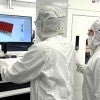
Rice researchers advancing microelectronics manufacturing on DARPA-funded team
Rice is a key partner on an $840 million project to develop the next generation of high-performing semiconductor microsystems for the U.S. Department of Defense.
Rice researchers advancing microelectronics manufacturing on DARPA-funded team
Rice is a key partner on an $840 million project to develop the next generation of high-performing semiconductor microsystems for the U.S. Department of Defense.

Rice neuroscientists to build state-of-the-art neural recording system
Rice neural engineer Chong Xie and his team have won a $2.9 million R01 grant from the NIH to develop a state-of-the-art implantable neural electrode system that is highly biocompatible, untethered and capable of stable, long-term and large-scale neural recording and stimulation.
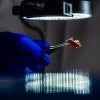
Rice engineers’ probe could help advance treatment for spinal cord disease, injury
Rice neuroscientists have used a nanosized sensor to record spinal cord neurons in free-moving mice, a feat that could lead to the development of better treatments for spinal cord disease and injury.

A number of Rice graduate programs are rated among the nation’s best in the latest edition of U.S. News and World Report’s “Best Graduate Schools” rankings.

Discovery highlights ‘critical oversight’ in perceived security of wireless networks
A research team led by Edward Knightly has uncovered an eavesdropping security vulnerability in high-frequency and high-speed wireless backhaul links.
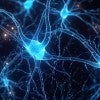
In the brain at rest, neurons rehearse future experience
New research from Rice and the University of Michigan sheds light on how individual neurons in the hippocampus of rats stabilize and tune spatial representations during periods of rest following the animals’ first time running a maze, offering first proof of neuroplasticity during sleep.

Global collaboration takes root in Paris: Rice and PSL forge research ties
Rice University and Université Paris Sciences & Lettres (PSL) convened leading researchers for a daylong summit May 14 at the Rice Global Paris Center, following the official launch of a strategic research partnership between the two institutions.
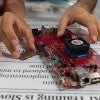
Rice senior design team selected as finalists for CASS Student Design Competition
A senior design team from Rice University’s George R. Brown School of Engineering was recently selected as one of four finalists for the IEEE Circuits and Systems Society (CASS) Student Design Competition.

Rice doctoral alum turned Google executive wins technical Emmy
Rice doctoral alumnus and current Google executive and technical fellow Parthasarathy Ranganathan has won a technical Emmy for “design and deployment of efficient hardware video accelerators for cloud.”

Rice engineers develop innovative microbiome analysis software tools
Rice engineers have developed two new graph-based computational tools for tracking genomic variation within microbiomes.
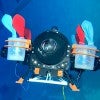
Underwater robot pioneers new energy-efficient buoyancy control
A remotely operated underwater robot built by a team of Rice University engineering students pioneers a new way to control buoyancy via water-splitting fuel cells.

Rice students build low-cost cold spray metal 3D printer prototype
A team of Rice University students has developed a cold spray metal 3D printing device that relies on pressure and velocity rather than temperature to create a metal part.

Study uncovers neural mechanisms underlying foraging behavior in freely moving animals
Rice neuroscientist Valentin Dragoi and team shed light on what happens in the brain of freely-moving macaques engaged in foraging behavior.

First curved data link sidesteps key 6G wireless challenge
Researchers at Rice and Brown University have demonstrated the world’s first curved data link, an achievement that could revolutionize wireless communications.
Rice team demonstrates miniature brain stimulator in humans
Rice engineers have developed the smallest implantable brain stimulator demonstrated in a human patient that could revolutionize treatment for drug-resistant depression and other psychiatric or neurological disorders.