
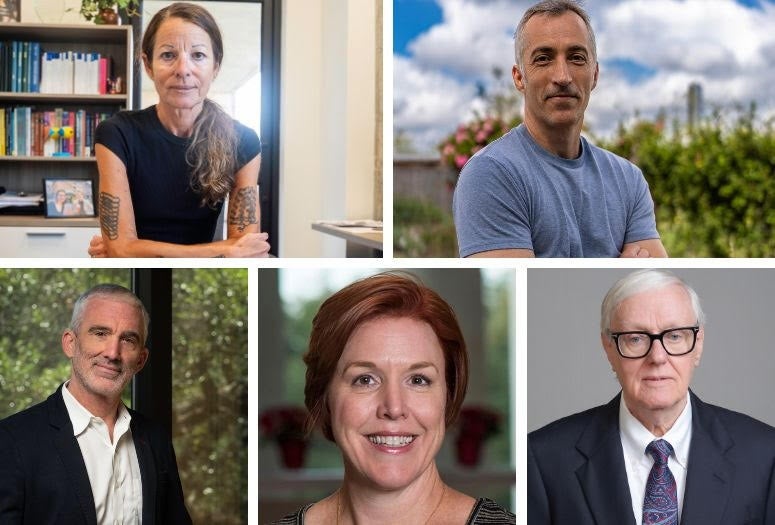
Five Rice University professors, Pernilla Wittung-Stafshede, Volker Rudolf, Edward Knightly, Marcia O’Malley and Ed Billups, have been elected as fellows of the American Association for the Advancement of Science (AAAS). AAAS, one of the world’s largest scientific societies and publisher of the Science family of journals, recognizes fellows whose efforts have led to a scientifically or socially distinguished advancement of science or its applications.
“Congratulations to these five outstanding scholars on this well-deserved recognition,” said Amy Dittmar, the Howard R. Hughes Provost and executive vice president for academic affairs. “Their work exemplifies the depth, interdisciplinary strength and real-world impact of Rice research — from advancing human health and understanding our natural world to shaping the future of technology. Honors like this affirm Rice’s growing leadership on the global scientific stage and our commitment to discoveries that improve lives.”
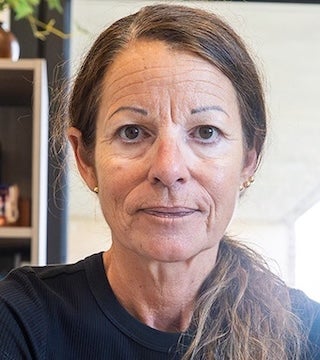
Wittung-Stafshede, professor of chemistry, started her career studying the role of metal ions in protein folding mechanisms, eventually transitioning to protein dysfunction and aggregation. This distinction honors her biophysical work on interactions underlying protein dysfunction and pathological aggregation in human disease. Currently, she is particularly interested in unraveling properties of amyloids, long fibers of tightly packed misfolded proteins found in many neurodegenerative diseases.
“I am honored to be recognized by the AAAS,” said Wittung-Stafshede, who is a fellow in many European societies and academies. “I have recently returned to the American scientific community, and it is really a treat to be recognized by one of its largest scientific organizations.”
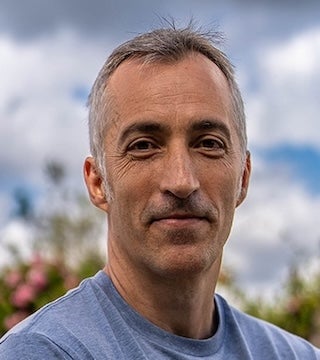
Rudolf, professor of biosciences, is being recognized for his distinguished contributions on the role of stage-structured species interactions in shaping community structure and disease transmission. His current work integrates mathematical models with field studies and experiments in aquatic ecosystems, including amphibians and vertebrates in local Texas ponds, to help predict how species and natural ecosystems will respond to a rapidly changing world.
“Even within a lifetime of work, I’m never going to understand the complexity of the aquatic ecosystems I study,” Rudolf said. “But it really is an honor to have this research and its impact recognized.”
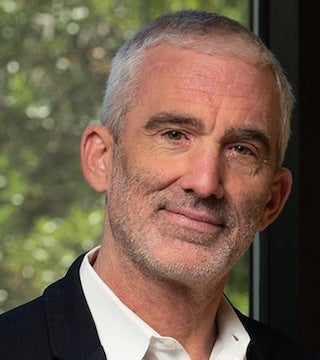
Knightly, the Sheafor-Lindsay Professor of Electrical and Computer Engineering, works on next-generation wireless systems with a focus on communication, sensing and security. He is being honored for research on high-performance wireless technologies that impacted Wi-Fi and for contributions to the advancement of community-focused connectivity through large-scale experimental networks.
“Our goal is to make wireless networks more capable, flexible and accessible, especially in communities that have been underserved,” Knightly said. “I’m grateful to the students, collaborators and partners who have made that work possible.”
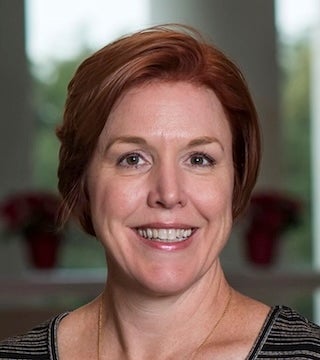
O’Malley is the Thomas Michael Panos Family Professor in Mechanical Engineering, Computer Science and Electrical and Computer Engineering and chair of the Department of Mechanical Engineering. She is being recognized for outstanding contributions to the design and control of wearable and assistive robotics and haptic feedback systems, their application to augmenting human performance and for dedication to professional leadership.
“I’m truly honored to be named a fellow of AAAS,” O’Malley said. “It’s a privilege to be recognized among such an accomplished group of researchers and innovators.”
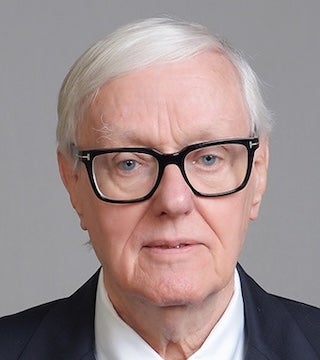
Billups is a professor emeritus of chemistry whose research has spanned organic, inorganic and materials chemistry for over five decades and is characterized by the synthesis of highly strained and reactive molecules as well as the chemical modification of carbon-based nanomaterials. He is being honored for his research on single-wall carbon nanotubes, including methods to functionalize these structures to enhance their properties for specific applications.
“I am excited to have my body of work recognized by the AAAS,” Billups said, “especially as carbon nanotubes are becoming more and more integrated into current technology and advances.”
The AAAS has been recognizing achievements across a wide variety of scientific fields through its fellowship program since 1874. This program honors scientists, engineers and innovators whose efforts are scientifically or socially distinguished.
“This year’s AAAS Fellows have demonstrated research excellence, made notable contributions to advance science and delivered important services to their communities,” said Sudip S. Parikh, AAAS chief executive officer and executive publisher of the Science family of journals. “These fellows and their accomplishments validate the importance of investing in science and technology for the benefit of all.”
The 2026 class represents 34 AAAS disciplinary sections. Wittung-Stafshede, Rudolf, Knightly, O’Malley and Billups will join ranks with 34 previous Rice fellows as well as notable scientists like W.E.B. DuBois, Steven Chu, Ellen Ochoa, Vint Cerf, Irwin M. Jacobs, Mae Jemison and Ayanna Howard. The elected fellows will be honored at the annual Fellows Forum March 29 in Washington, D.C.