

Sociologist Ecklund named director of Boniuk Institute
Elaine Howard Ecklund, an internationally acclaimed sociologist of religion, is the new director of the Boniuk Institute for Religious Tolerance at Rice University.
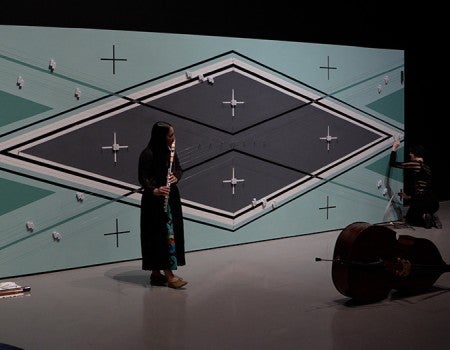
Nameless Sound musicians performed an original score on Nanibah Chacon’s interactive installation following Danza Azteca Macuilxochitl's activation of...

Rice’s James Tour recently published an improved method to recover antimony from this electronic waste stream. ...
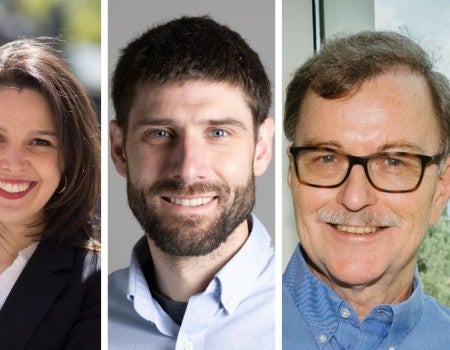
Three Rice faculty members from the Department of Earth, Environmental and Planetary Sciences have recently been honored with career awards, showcasin...

The Adventurous Electric Guitar Festival gathered players, composers and scholars to test the instrument’s next act....
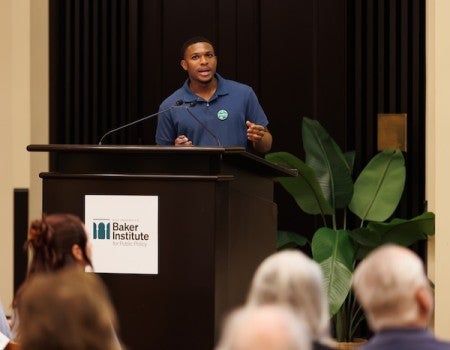
The Science and Technology Policy Program at Rice’s Baker Institute for Public Policy hosted a “science cafe” Oct. 13 to bring research to reality and...
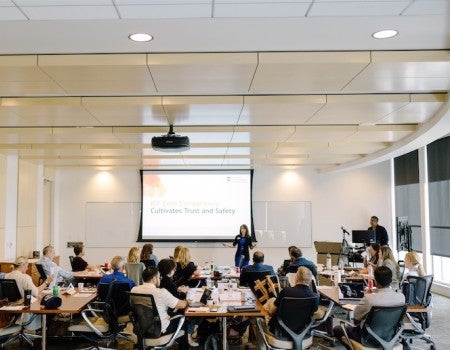
The Doerr Institute for New Leaders at Rice has launched CoachRICE: Team Coaching, a new professional education program designed to help coaches, mana...
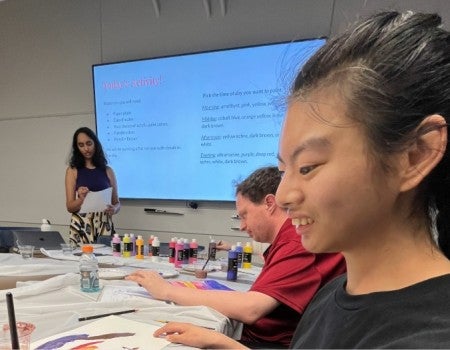
Graduate student Sayuri Jayawardena has started a Rice chapter of Lifelong Learning with Friends. ...
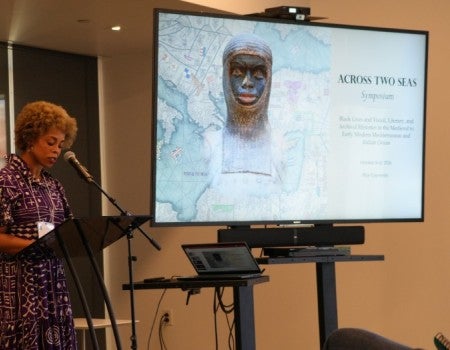
Scholars, curators and filmmaker Daphne Di Cinto gather at Rice to explore Black histories from Renaissance Italy to medieval Africa and Islamic world...
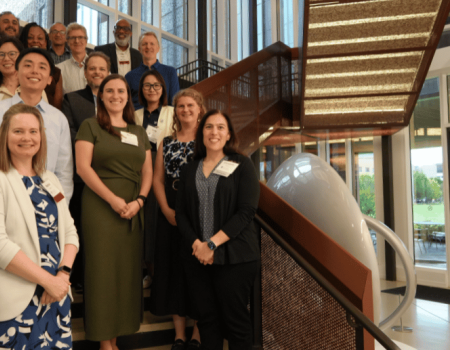
For the sixth fall in a row, Rice welcomed a new group of researchers to STaRT@Rice, giving emerging researchers both the skills and the support to gr...
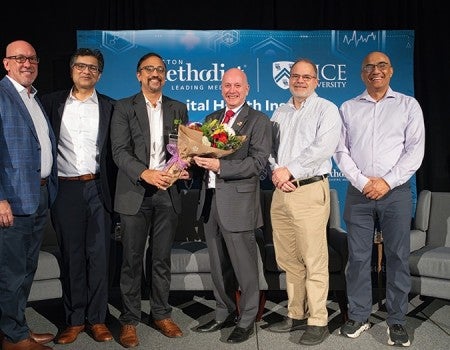
Rice and the Houston Methodist Research Institute have signed a memorandum of understanding with LSE Health at the London School of Economics and Poli...
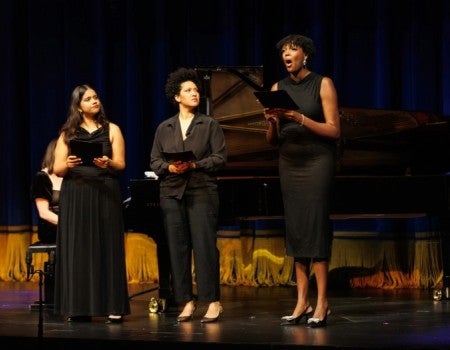
As the 2026-27 Aleko Endowed Artist, Julia Bullock curated an evening of song, chamber music and poetry celebrating the Harlem Renaissance....
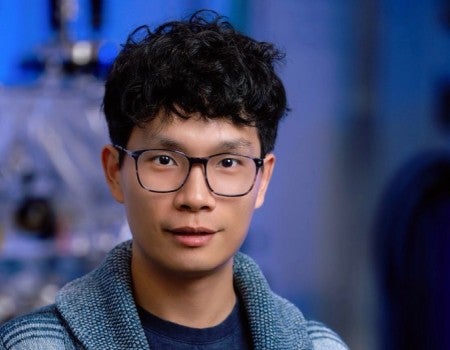
Rice’s Yonglong Xie is one of 20 early-career scientists, mathematicians and engineers to receive a 2026 Packard Fellowship. ...
Sociologist Ecklund named director of Boniuk Institute
Elaine Howard Ecklund, an internationally acclaimed sociologist of religion, is the new director of the Boniuk Institute for Religious Tolerance at Rice University.

Stephen Klineberg: A retrospective
Through most of the 20th century, Houston thrived. It was a one-horse industrial town, riding its location near the East Texas oil fields to continued prosperity. The city was also world-famous for having imposed the least possible controls on development of any city in the Western world. Houstonians proclaimed themselves to be the epitome of what Americans can achieve when left unfettered by zoning codes, government regulations or excessive taxation.

New study of racism caught on video spotlights hate faced by Asians, Asian Americans amid pandemic
A new Rice University study showcases the severity of discriminatory behavior toward Asians and Asian Americans driven by the COVID-19 pandemic.

Rice to welcome four new trustees
Rice University will begin the next academic year with four new Board of Trustee members. Asuka Nakahara, Jeremy Thigpen, Claudia Gee Vassar and Lori Whitten will serve four-year terms beginning July 1.

An expert panel will discuss what’s driving prices at the pump in a May 26 webinar from Rice University’s Baker Institute for Public Policy.
Rice names James Hurley assistant vice president of alumni relations
James Hurley will join Rice’s Office of Development and Alumni Relations (DAR) as its assistant vice president of alumni relations. He will assume his new role Aug. 1.

Rice bioengineers are shining light on bacterial stress
Rice bioengineers are ready to shine a lot of light on bacteria’s genetic response to stress.
People, papers and presentations for May 23, 2022
Alexander Dessler, an emeritus professor of physics and astronomy, has published a personal history of the early days of Rice’s Space Science Department in the journal Perspectives of Earth and Space Scientists.

CPRIT grants entice three cancer researchers to Rice
Rice University recruits three professors to bolster cancer research with grants from the Cancer Prevention and Research Institute of Texas.

Spinning is key for line-dancing electrons in iron selenide
Quantum physicists at Rice have helped answer an important question at the forefront of research into superconductivity.