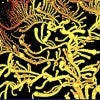
Rice University engineers are printing 3D lattices of glass and crystal with sub-200 nanometer resolution. The technique could make it practical to print micro-scale electronic, mechanical and photonic devices.
Dr. Rola El-Serag will join Rice University’s Baker Institute for Public Policy Oct. 18 as the L.E. and Virginia Simmons Senior Fellow in Health Policy and director of the institute’s Center for Health and Biosciences.
When people see diversity in a corporate team, they’re more likely to believe the team behaves in a moral fashion, according to research conducted by Ajay Kalra, the Herbert S. Autrey Professor of Marketing at the Jones Graduate School of Business, and Uzma Khan, associate professor of marketing at the University of Miami Herbert Business School. Their work has just been published in a paper entitled "It's Good to Be Different: How Diversity Impacts Judgments of Moral Behavior."
OpenStax, Rice University’s educational technology initiative offering free and flexible textbooks and other resources, has added nine new technology partners to its OpenStax Ally program.
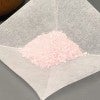
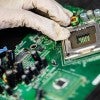
Flash Joule heating recovers valuable and toxic metals from electronic waste. The process allows for “urban mining” of resources that could be a win for the environment as well as for manufacturers.
The transition to renewable energy will make the U.S. energy supply significantly more secure not only by decreasing the mining and materials required to build fossil fuel systems, but also by avoiding the political risks that threaten fossil fuel supply chains, according to new research from Rice University’s Baker Institute for Public Policy.
Ambassador Edward Djerejian, director of Rice University’s Baker Institute for Public Policy, this week announced his retirement effective at the conclusion of his 28th year, on June 30, 2022.
Four institutions will share an NSF grant of nearly $5 million to support scholarships for students seeking master’s degrees in engineering and related fields.
The NSF awards nearly $3 million to the Center for Theoretical Biological Physics to continue its leadership role in the Physics of Living Systems graduate research network.