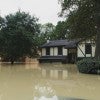
People who suffer abuse or neglect as children may have trouble managing stress later in life, a problem that’s linked to a host of negative health conditions, according to new research from Rice University.
In one of the first studies of its kind, researchers have gauged how biodiversity loss of birds and mammals will impact plants’ chances of adapting to human-induced climate warming.
A live television shot of one of the most iconic sights in Houston is now streaming at all hours of the day and night, providing 24/7 video of Rice’s Academic Quadrangle.
Before the solar system had planets, the sun had rings — bands of dust and gas similar to Saturn’s rings — that likely played a role in Earth’s formation, according to a new study.
As the anniversary of the Jan. 6 attack on the U.S. Capitol approaches, Rice political scientists Mark Jones and Paul Brace are available to discuss how the insurrection has impacted American politics.
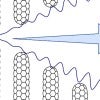
Superconducting uranium ditelluride is a promising material in the race to create fault-tolerant quantum computers, but physicists are rethinking how superconductivity arises in the material in light of puzzling new experimental evidence in this week’s issue of Nature.
Rice University will be on winter break from Dec. 23 through Jan. 3 and will reopen for regular operations Jan. 4. News media with an urgent request can reach the Rice News and Media Relations representative on call at 713-348-6774, but please keep in mind that we will have limited access to our faculty experts during the holiday break.
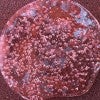
An unknown culprit has been removing oxygen from our atmosphere for at least 800,000 years, and an analysis of air bubbles preserved in Antarctic ice for up to 1.5 million years has revealed the likely suspect.
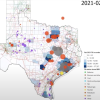
What happened to electrical power in Texas during last February's freeze? A new time-lapse video of electricity generation created by experts at Rice University’s Baker Institute for Public Policy offers an hour-by-hour picture of power plant and customer outages across the state during the devastating storm.
A new, interactive energy map for the United States has just been released by Rice University's Baker Institute for Public Policy, providing an open-source visualization of the country’s energy infrastructure and demography designed to highlight the intersection of energy, environment, policy and society.