
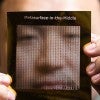
Eavesdroppers can hack 6G frequency with DIY metasurface
Rice engineers discovered 6G wireless “pencil beams” are vulnerable to eavesdroppers armed with DIY metasurfaces.
Eavesdroppers can hack 6G frequency with DIY metasurface
Rice engineers discovered 6G wireless “pencil beams” are vulnerable to eavesdroppers armed with DIY metasurfaces.

Sophisticated fluid mechanics model is on a roll
Engineers at Rice and Waseda universities produce a video simulation to illustrate the complex aerodynamics around a moving car and its tires.

Rice experts available to discuss forthcoming decision on Roe v. Wade
Following the leak of a draft Supreme Court opinion regarding a Mississippi law challenging Roe v. Wade and with the expectation a decision will come down soon, Rice University experts are available to discuss what to expect from the court regarding a decision on the landmark case.

Computational sleuthing confirms first 3D quantum spin liquid
Physicists have confirmed the first 3D quantum spin liquid, a solid material with a liquidlike magnetic state.

Rice to release 41st annual Kinder Houston Area Survey
Houstonians’ views on the economy, crime, the pandemic and other issues related to the city’s demographic transformations will be revealed in the 2022 Kinder Houston Area Survey, which will be released at a May 17 at a luncheon at the Marriott Marquis Houston.
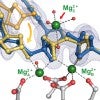
Crystal study may resolve DNA mystery
Rice University bioscientists have uncovered a tiny detail that could help understand how DNA replicates with such astounding accuracy.
Djerejian and Boles to discuss role and future of think tanks
Ambassador Edward Djerejian, director of Rice University’s globally top-ranked Baker Institute for Public Policy, will reflect on his 28-year directorship and discuss the future of think tanks in a special Director’s Lecture Series event May 12 with Rice historian John Boles.

Daniel Preston wins NSF CAREER Award
Daniel Preston wins a National Science Foundation CAREER Award to develop textile-based wearable robots.

Rice University commencement media advisory
Rice University’s commencement ceremonies for conferral of degrees to undergraduate and graduate degree candidates will be held Saturday, May 7.

Rice U. launches new small-business accelerator
BlueLaunch, the latest initiative from the Rice Alliance for Technology and Entrepreneurship, provides hands-on training and mentoring designed to support the success of Rice-affiliated small-business entrepreneurs in any industry.
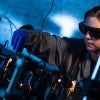
Rice ‘metalens’ could disrupt vacuum UV market
Rice photonics researchers have created a potentially disruptive technology for the ultraviolet optics market.

Rice creates major in sport analytics to offer training in rapidly expanding field
Sport analytics, the subject of the hit movie “Moneyball” and the book of the same name , has transformed the way professional and college teams scout and evaluate potential players.

Subtle racial slights at work cause job dissatisfaction, burnout for Black employees
Black employees face a host of subtle verbal, behavioral and environmental slights related to their physical appearance, work ethic, integrity and more, causing job dissatisfaction and burnout, according to a new study from Rice University.
Former VP Mike Pence to speak at Rice’s Baker Institute May 10
Former Vice President Mike Pence will discuss U.S. energy policy and a path to increasing energy security at Rice University’s Baker Institute for Public Policy May 10. The invitation-only event will be open to the media and will be webcast.
Rice process aims to strip ammonia from wastewater
Engineers develop a high-performance nanowire catalyst that pulls ammonia and solid ammonia (fertilizer) from nitrate in wastewater.