

Mental health of Black and Hispanic veterans improved after Obama election, study finds
The mental health of Black and Hispanic veterans improved when Barack Obama was elected president, according to new research from Rice University.
Mental health of Black and Hispanic veterans improved after Obama election, study finds
The mental health of Black and Hispanic veterans improved when Barack Obama was elected president, according to new research from Rice University.

Schneider selected to direct Religion and Public Life Program
Rachel Schneider has been named the new director of the Religion and Public Life Program (RPLP), which will now be housed in Rice University’s Boniuk Institute for Religious Tolerance .

Top hospitals blatantly violating price-transparency mandate, says Baker Institute report
Many of the nation’s most prominent hospitals are blatantly violating federal mandates requiring transparency in pricing, and all too often patients are being kept in the dark about dramatic differences between publicly reported prices for services and their actual cost, according to a new report from Rice University’s Baker Institute for Public Policy.
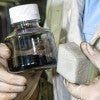
Cars could get a ‘flashy’ upgrade
Rice University chemists, working with the Ford Motor Company, processes waste plastic from end-of-life trucks into graphene for composite materials in new vehicles.

Sociologist Ecklund named director of Boniuk Institute
Elaine Howard Ecklund, an internationally acclaimed sociologist of religion, is the new director of the Boniuk Institute for Religious Tolerance at Rice University.

New study of racism caught on video spotlights hate faced by Asians, Asian Americans amid pandemic
A new Rice University study showcases the severity of discriminatory behavior toward Asians and Asian Americans driven by the COVID-19 pandemic.

An expert panel will discuss what’s driving prices at the pump in a May 26 webinar from Rice University’s Baker Institute for Public Policy.

Rice bioengineers are shining light on bacterial stress
Rice bioengineers are ready to shine a lot of light on bacteria’s genetic response to stress.

CPRIT grants entice three cancer researchers to Rice
Rice University recruits three professors to bolster cancer research with grants from the Cancer Prevention and Research Institute of Texas.

Spinning is key for line-dancing electrons in iron selenide
Quantum physicists at Rice have helped answer an important question at the forefront of research into superconductivity.

Getting ourselves back to the garden
A prairie garden at Rice University demonstrates the benefits of replacing manicured lawns with resilient plants and grasses that need little maintenance and help protect the environment.

The Baker Institute’s Center for the Middle East will henceforth be known as the Edward P. Djerejian Center for the Middle East in recognition of Ambassador Djerejian’s role as founding director of the Baker Institute and of his “extraordinary leadership and deeply impactful foreign service career.“
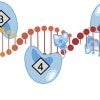
DAP array casts a wide net to fix mutations
Rice engineers introduce DAP, a streamlined CRISPR-based technology that can perform many genome edits at once to address polygenic diseases caused by more than one glitch.

Applications open for next Rice Alliance Clean Energy Accelerator
Applications are open through May 31 for the second cohort of the Rice Alliance Clean Energy Accelerator, which helps seed-stage startups refine and grow their sustainable and energy-transition technology solutions.

Rice chemists skew the odds to prevent cancer
A theoretical framework by Rice University scientists shows how to increase the odds of identifying cancer-causing mutations before tumors take hold. They demonstrate that only a few energetically favorable pathways are likely to lead to cancer.