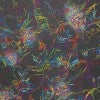
When many act as one, data-driven models can reveal key behaviors
Data science approaches can reveal subtle clues about the origins of such collective behaviors as aggregation of bacteria.
When many act as one, data-driven models can reveal key behaviors
Data science approaches can reveal subtle clues about the origins of such collective behaviors as aggregation of bacteria.
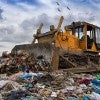
Sustainability alone cannot fix waste management woes, says expert
Both sustainability practices and a circular economy can help maximize the world’s resources, but the ideas are not interchangeable, according to a new brief from Rice's Baker Institute for Public Policy.

Padley named interim VP for IT, chief information officer
Paul Padley, a professor of physics and astronomy and director of the Bonner Nuclear Laboratory, has been named Rice’s interim vice president for information technology and chief information officer.

Iran’s water crisis is a warning for the US
HOUSTON – (Aug. 3, 2021) – Iran’s groundwater depletion and food security crisis is an issue of global importance reflecting not only climate change, but also a pattern of policy mismanagement, according to an expert from Rice University’s Baker Institute for Public Policy.

University message shares important updates to COVID-19 response policy
University message shares important updates to COVID-19 response policy

NSF grant kicks off Center for Adapting Flaws into Features
Rice University has won a Phase I National Science Foundation grant to establish the NSF Center for Adapting Flaws into Features to investigate nanoscale chemical phenomena and optimize the structures and electronic properties of materials.

How headless hydra feel, react to prodding
Researchers identify redundant neural networks in jellyfish-like, freshwater hydra. The work is a step toward modeling how internal states and external stimuli shape the behavior of an organism with a highly dynamic neural architecture.

Retired Rice economist Ken Wolpin receives prestigious Jacob Mincer Award
Ken Wolpin, the retired Lay Family Professor of Economics at Rice University and former department chair whose work revolutionized the field of labor economics, is this year's recipient of the Jacob Mincer Award for lifetime contributions to the discipline.

People, papers and presentations for Aug. 2, 2021
Rice Architecture alumnus Cohen Hudson '21 won a Texas Society of Architects/AIA 2021 Studio Award for his master's thesis project USPS+, a proposal for a new post office in San Antonio that leverages mass timber technologies "to expand the United States Postal Service's functions and define a system for the construction of a new type of post office."

Science and technology research is critical infrastructure, says Baker Institute
HOUSTON – (July 30, 2021) – Investments in science and technology research are vital to the United States’ economic growth and global leadership, according to a new report from Rice University’s Baker Institute for Public Policy.
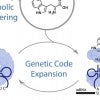
Programmed bacteria have something extra
Rice chemists expand genetic code of E. coli to produce 21st amino acid, giving it new abilities.

Vardi wins award for social and professional responsibility
Rice computer scientist Moshe Vardi has won the 2021 Norbert Wiener Award for Social and Professional Responsibility from IEEE's Society on the Social Implications of Technology.

Owls at the Olympics: Ogwumike is up
Rice Owls alumni are showcasing their skills in the Tokyo Olympics.
People, papers and presentations for July 26, 2021
Rice alumnus Ryan Udell ’21 has been named to the Aviation Week Network’s 20 Twenties Class of 2021, which honors exceptional students seen as the future of the aerospace and defense industries