A team of Rice University researchers have won a 4-year, $1.2 million grant from the Department of Energy to evaluate the strengths and limitations of different physical systems used to build quantum computers and inform strategies for achieving near-term advances in quantum computing.
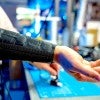
Rice U. engineers developed a lightweight, wearable textile-based device that can deliver complex haptic cues, enabling a user to perform open-world navigation tasks. The device is resilient to regular daily use, withstanding multiple cycles of washing and other damage and repair without loss of function.
Two leading experts in the biomedical engineering field, Michael King and Cynthia Reinhart-King, whose research programs have advanced the understanding and treatment of cancer and other diseases, will join the Rice University faculty next year.
Rice U. bioengineers developed a platform that enhances survival and function of probiotics engineered to diagnose inflammatory bowel disease in animals. The technology holds promise for minimally invasive disease monitoring and advanced smart therapeutics.
Rice U.’s Carolyn Nichol has won a competitive 5-year, $1,038,544 NIH Science Education Partnership Award (SEPA) award to address race-based cancer health disparities by increasing underrepresented minority student populations’ engagement and participation in biosciences education.
A $6.25 million National Institutes of Health grant supports Rice U. engineers optimizing a neural probe array that can record the activity of spinal cord neurons as bodies move and behave. Scientists would also develop an integrated data-processing and stimulation-feedback system.
Rice University scientists have found that a boron nitride nanocomposite interacts with light and heat in unexpected ways that could be useful for advanced technology applications.
Las Vegas; Miami; Louisville, Kentucky; Orlando, Florida; and Grand Rapids, Michigan top the list of cities at greatest risk of losing jobs to artificial intelligence (AI), according to a report from the Chamber of Commerce, a business research company.
Rice University experts are available to comment on a new report from the Chamber of Commerce predicting that Houston stands to lose as many as 12% of jobs due to AI by 2027.
Rice University’s Global Medical Innovation program combines engineering, business and clinical training to help students solve real-world medical needs.
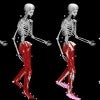
A team of Rice University engineers has launched open-source software that constructs and uses personalized computer models of how individual patients move to optimize treatments for neurologic and orthopedic mobility impairments.
Kaiyu Hang, an assistant professor of computer science at Rice University, has won a National Science Foundation CAREER Award to develop robots that can manipulate unfamiliar objects in high-uncertainty situations.
Rice University AI experts Fred Oswald and Moshe Vardi are registered to attend a White House briefing this afternoon and are available to comment on its proceedings and likely challenges and potential outcomes of recent developments in AI industry advancements and regulation.
Rice University researchers leverage the quantum properties of strontium titanate to make a broad terahertz frequency range useful for quantum control and sensing applications.
The new open-source large language model, Llama 2, launched by Facebook parent company, Meta, last Tuesday allows users to adapt and develop artificial intelligence tools ⎯ including for use in commercial products ⎯ but the move raises urgent questions about the risks and potential benefits to how information is produced and disseminated.