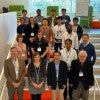
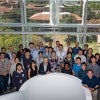
An international audience of more than three dozen quantum researchers, including Rice’s Pengcheng Dai, Randall Hulet, Douglas Natelson, Han Pu, Ming Yi and Boris Yakobson, attended the Vannevar Bush Faculty Fellowship Symposium on Extreme Quantum Materials at Rice Nov. 9.
Pedro Alvarez, the George R. Brown Professor of Civil and Environmental Engineering at Rice, received an Outstanding Achievement Award from the Chinese Chemical Society for his “long-term systematic contributions in basic research and technology development in the field of environmental chemistry.”
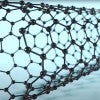
An international team of scientists led by Rice’s Matteo Pasquali has won a $4.1 million grant to optimize carbon nanotube synthesis. The award is a joint effort by The Kavli Foundation, with a $1.9 million Exploration Award in Nanoscience for Sustainability, and Rice’s Carbon Hub, which contributed an additional $2.2 million.
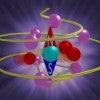
Rice experiments have provided the first direct evidence that electricity seems to flow through “strange metals” in an unusual liquid-like form. The first “shot noise” experiments on a strange metal from the Vienna University of Technology (TU Wien) are detailed this week in Science by physicists from both universities.
The Howard Hughes Medical Institute awarded Rice University with $2.5 million spanning over five years as part of its Driving Change initiative designed to connect research universities that are working to build inclusive learning environments for students in science, technology, engineering and mathematics.
Rice’s Santiago Segarra and Ashutosh Sabharwal have won a grant from the DEVCOM Army Research Laboratory to develop a machine learning framework that improves military communication networks’ decision-making processes. The research could also help inform applications such as self-driving vehicles and cyber intrusion detection.
A Rice student used galls — plant tissue growths caused by small wasps — to decorate a pair of shoes as part of an art project, creating some online buzz when a picture of the heels were posted on social media.
Rice’s Mark Torres and collaborators used rhenium as a proxy for fossil carbon in order to quantify the rate at which Earth naturally releases carbon dioxide into the atmosphere and found that high rates of carbon breakdown persist across the different geographical profiles of a river basin.
Rice scientists have developed a new low-cost, safe and effective process to free up and reattach fluorine to chemical compounds. In pharmaceuticals, fluorine can expand lifetime, increase absorption and minimize side effects.
Rice recently hosted the first International Workshop on Quantum Vacuum in Matter, an event that brought together leading experts in the field from around the world to discuss recent advances, discoveries and research priorities.
The Severe Storm Prediction, Education and Evacuation from Disasters (SSPEED) Center at Rice hosted its 11th annual conference last month at the university’s Anderson-Clarke Center.
A new study by Rice climate scientist Sylvia Dee and an international team of collaborators sheds light on the impact that global temperature variation over the past 2,000 years has had on the planet’s hydrological cycle.
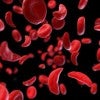
Rice University’s Gang Bao is available to comment on today’s decision by the FDA on whether or not to approve a CRISPR-based therapy for sickle cell disease.
Rice theoretical physicist Evelyn Tang is an inaugural recipient of the Interdisciplinary Early Career Scientist Prize from the International Union of Pure and Applied Physics.