

‘An investment in people’: Rice physics professor earns Packard Fellowship
Rice’s Yonglong Xie is one of 20 early-career scientists, mathematicians and engineers to receive a 2026 Packard Fellowship.
‘An investment in people’: Rice physics professor earns Packard Fellowship
Rice’s Yonglong Xie is one of 20 early-career scientists, mathematicians and engineers to receive a 2026 Packard Fellowship.

New monolithic ion trap developed for accessible quantum simulations
Rice’s Guido Pagano, along with collaborators at Duke University and Translume Inc., has developed a new kind of trapped-ion simulator, called a monolithic segmented 3D ion trap.

Rice researchers discover magnetic liquid crystal state in rare earth compound
In a recent study published in Physical Review X, Rice researchers showed YbMnBi₂'s magnetic spins prefer certain directions even when fluctuating.

New catalogs map quantum possibilities of atomically thin materials
In two papers published in Science Sept. 24, an international collaboration provides both the building blocks and a guide to the search for families of twistronics.

Rice Global Paris Center hosts physicists probing the origins of collective behavior in QCD
The workshop co-organized by Rice, IIT Madras and École Polytechnique lays the groundwork for a three-way partnership.

Levitated magnet opens new frontier in search for ultraheavy dark matter
Rice researchers have used a magnetically levitated particle to search for ultraheavy dark matter.
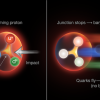
Scientists uncover new clue to how protons maintain their identity
New results from the STAR detector at the Relativistic Heavy Ion Collider (RHIC) suggest that gluons, the gluelike particles that hold quarks together inside protons, play a central role in the conservation of baryon number, an essential part of a particle’s quantum identity.

Rice researchers discover new way to tune electron flow in altermagnet material
Rice’s Pengcheng Dai recently published a paper in Physical Review X describing the first successful efforts to put a proposed altermagnet material into a single magnetic domain state, allowing the research team to characterize the material’s intrinsic magnetic structure.
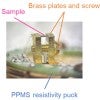
A small squeeze reveals new clues about an unusual kind of magnet
Researchers at Rice have found that gently squeezing a crystal of iron sulfide can change two of its unusual properties at the same time: its tiny magnetic signal and the way electricity moves through it.

New controls allow researchers to incorporate thermal effects in quantum simulation
Rice physicist Guido Pagano unveiled a new, two-knob control for a trapped-ion quantum simulator that allows individual control of temperature and dissipation.
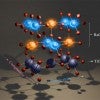
Shedding light on new type of magnetism in quantum materials
Rice's Ming Yi recently showed that the quantum material ruthenium dioxide potentially displays this new altermagnetism in its ultrathin film form in which the material is prepared as a very thin slice only a few atomic layers thick.
New detector design has potential to expand search for dark matter
Rice researchers’ detector concept uses engineered semiconductor materials to search for axions in a range of possible masses that has remained difficult to probe with existing experiments.

Listening through a network: A new view of how the cochlea processes sound
Rice researchers developed a new way to model how the cochlea processes incoming sound using graph signal processing, which could shed light on what happens as hearing deteriorates with age and make possible better assistive technologies for people with hearing loss.

Rice-led team reveals how trios of quantum particles form checkerboard patterns
Rice's Kaden Hazzard and his team recently developed a theory on how trions in quantum particles form and behave.

Rice unites global quantum materials synthesis leaders in Paris for cutting-edge workshop
The Rice Center for Quantum Materials hosted a workshop on quantum materials synthesis at the Rice Global Paris Center, bringing together global researchers in physics, materials science, chemistry and quantum research to identify new directions and address urgent challenges facing the quantum materials synthesis community.