Ramamoorthy Ramesh, a condensed matter physicist and materials scientist with more than 25 years in academia, industry, national labs and government service, has been named Rice University’s vice president for research.
Even if they’ve never served time in prison, people who have felony convictions still have difficulty accessing stable housing, according to new research from a Rice University sociologist.
For school-age students and their parents, school choice programs can be complicated and stressful. Research from Rice University economist YingHua He suggests the process gets easier when schools are upfront about admission prospects and other details that factor into decisions, and that students should be allowed to apply before having to rank schools in order of preference.
Restrictive immigration policies and aggressive law enforcement are harmful to the mental health of immigrants living in the United States illegally, according to a new report from Rice University’s Baker Institute for Public Policy.
Bioengineers used deactivated Cas9 fusion proteins to synthetically control gene expression and reveal new details about natural processes in human cells.
Carbon nanotubes’ natural fluorescence enables a method to detect high strain concentrations, which can lead to damage that threatens the integrity of critical infrastructure like aircraft, buildings, pipelines, bridges and ships.
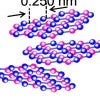
Rice University chemists use their flash Joule heating process to synthesize 2D flakes of boron nitride and boron carbon nitride, highly valued for lending thermal and chemical stability to compounds.
Racial apathy and the belief that Black people no longer experience prejudice in today’s world represent the “new racism,” according to Tony Brown, professor of sociology at Rice University and lead author of the study, “Changes in Racial Apathy Among White Young Adults: A Five-Year National Panel Study,” published in the journal Sociological Inquiry.