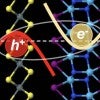
In a twist befitting the strange nature of quantum mechanics, physicists have discovered the Hall effect — a characteristic change in the way electricity is conducted in the presence of a magnetic field — in a nonmagnetic quantum material to which no magnetic field was applied.
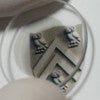
Rice University engineers have discovered technology that could slash the cost of semiconductor electron sources, key components in devices ranging from night-vision goggles and low-light cameras to electron microscopes and particle accelerators.
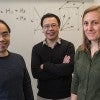
The lab of physicist Junichiro Kono will share in a $1 million grant from the Chan Zuckerberg Initiative to improve imaging of proteins, cells and tissues.
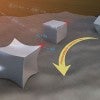
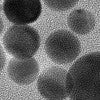
Points matter when designing nanoparticles that drive important chemical reactions using the power of light, according research from Rice University's Laboratory for Nanophotonics.
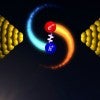
Nature's speed limits aren't posted on road signs, but Rice University physicists have discovered a new way to deduce them that is better — infinitely better, in some cases — than prior methods.
The Robert A. Welch Foundation announces the largest single gift in the history of Rice University, $100 million, to establish The Welch Institute for world-leading advanced materials research.
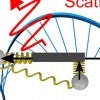
Researchers at Rice University have discovered details about a novel type of polarized light-matter interaction with light that literally turns end over end as it propagates from a source.
Mixing and matching computational models of 2D materials led scientists at Rice University to the realization that excitons can be manipulated in new and useful ways.
Rice Earth scientist Laurence Yeung earns a prestigious National Science Foundation CAREER Award to improve our understanding of the biosphere’s productivity.
U.S. and German physicists have found surprising evidence of a link between the 2D quantum Hall effect and 3D topological materials that could be used in quantum computing.