Rice University is one of 14 academic institutions to join the Center for Heterogeneous Integration of Micro Electronic Systems, a $32.7 million project created by the Semiconductor Research Corporation’s Joint University Microelectronics Program 2.0.
Brandon Levin, an assistant professor of mathematics at Rice University, has won a prestigious National Science Foundation CAREER Award to pursue his research on major unsolved problems in number theory.
Engineering’s Lauren Stadler has received a CAREER Award from the National Science Foundation to improve wastewater treatment by harnessing the power of microbiomes.
Taiyun Chi, an assistant professor of electrical and computer engineering at Rice University, has won a prestigious National Science Foundation CAREER Award to research the development of a high-performance neural interface and a noninvasive deep-brain-stimulation system.
Rice University scientists create carbon nanotubes and other hybrid nanomaterials out of plastic waste using an energy-efficient, low-cost, low-emissions process that could also be profitable.
Rice University scientists have figured out a way to engineer wood to trap carbon dioxide through a potentially scalable, energy-efficient process that also makes the material stronger for use in construction.
Rice University scientists enlist widely used cancer therapy systems to control gene expression in mammalian cells, a feat of synthetic biology that could change how diseases are treated.
Rice University and the University of Edinburgh in Scotland have unveiled the winners of the inaugural Rice-Edinburgh Strategic Collaboration Awards as part of their historic joint research initiative launched last year.
Rice University researchers discover that the Aedes aegypti mosquito’s DNA has the physical properties of a liquid crystal, a unique feature not found in any other species that could provide new clues on the factors that govern gene expression and regulation.
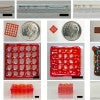
How do you build complex structures for housing cells using a material as soft as Jell-O? Rice University researchers have the answer with a new 3D-printing ink.
Rice University professors Thomas Killian and Marek Kimmel are elected fellows of the American Association for the Advancement of Science, a distinction that honors scientists, engineers and innovators whose efforts on behalf of science and its applications are scientifically or socially distinguished.
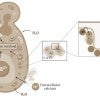
Just as a puppeteer moves a puppet by manipulating its strings, estrogen receptors, which play a crucial role in breast cancer, work in similar ways when they facilitate the interaction between hormones and DNA, according to Rice scientists.