

Rice researchers have developed an ultraporous material capable of pulling several valuable and rare earth elements from complex waste streams, a potential step toward recovering critical minerals that might otherwise be discarded.
Rice researchers have developed an ultraporous material capable of pulling several valuable and rare earth elements from complex waste streams, a potential step toward recovering critical minerals that might otherwise be discarded.
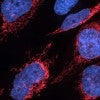
Researchers from Rice and Baylor College of Medicine have secured NIH funding to develop a novel, non-DNA-altering CRISPR gene-tuning therapy designed to restore cellular energy and improve recovery in hearts damaged by heart attacks.

Houston’s Asian population surges, but political representation lags, Rice study finds
As early voting begins, new Rice research sheds light on why some members of one of Houston’s fastest-growing populations say they remain underrepresented in local politics.

Career awards showcase layers of excellence in Rice science department
Three Rice faculty members from the Department of Earth, Environmental and Planetary Sciences have recently been honored with career awards, showcasing excellence at every stage of career.
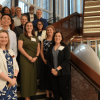
STaRT@Rice brings research training, connections and new ideas together
For the sixth fall in a row, Rice welcomed a new group of researchers to STaRT@Rice, giving emerging researchers both the skills and the support to grow as scholars.
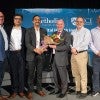
Rice, Houston Methodist and London School of Economics explore digital health collaboration
Rice and the Houston Methodist Research Institute have signed a memorandum of understanding with LSE Health at the London School of Economics and Political Science to explore collaboration on an interdisciplinary training program for future global health care leaders.

‘An investment in people’: Rice physics professor earns Packard Fellowship
Rice’s Yonglong Xie is one of 20 early-career scientists, mathematicians and engineers to receive a 2026 Packard Fellowship.

Rice psychologist takes resilience research beyond classroom
Rice psychological science professor Danielle King Jordan that brings years of research on workplace resilience out of academic journals and the traditional classroom and makes it available to anyone.
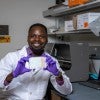
Rice scientists engineer new tool to improve detection of HIV and other viruses
Rice researchers have developed an improved version of Cas13a that could make it easier to detect HIV and other RNA viruses in blood and environmental samples.

New monolithic ion trap developed for accessible quantum simulations
Rice’s Guido Pagano, along with collaborators at Duke University and Translume Inc., has developed a new kind of trapped-ion simulator, called a monolithic segmented 3D ion trap.
Improved precision microscopy method developed by Rice professor
Rice’s Anna-Karin Gustavsson published a method in Nano Letters expanding the use of light sheet microscopy to include a single objective in commercially available sample chambers.

Rice launches One Giant Leap Ventures to back promising startups across university ecosystem
Rice has launched One Giant Leap Ventures Fund I, an early-stage fund built to invest in the university’s most promising spinouts and alumni-founded startups. Structured as an institutional venture fund, it enables participation from equity limited partners as well as philanthropic investors seeking to support Rice startups.

Rice researchers find evidence of true polar wander
Rice researchers find evidence of movement in the Earth's spin axis 56-48 million years ago.

Houston is booming, even as fertility rates fall
Houston’s population boom masks other trends that have been unfolding for more than two decades: Women here are having fewer children and having them later.

Rice researchers discover magnetic liquid crystal state in rare earth compound
In a recent study published in Physical Review X, Rice researchers showed YbMnBi₂'s magnetic spins prefer certain directions even when fluctuating.