

Rice and Lehigh partner with global industry leaders to revolutionize catastrophe modeling
The Consortium for Enhancing Resilience and Catastrophe Modeling (CERCat) convened at Rice Feb. 5-6 for its semiannual meeting.
Rice and Lehigh partner with global industry leaders to revolutionize catastrophe modeling
The Consortium for Enhancing Resilience and Catastrophe Modeling (CERCat) convened at Rice Feb. 5-6 for its semiannual meeting.
More precise DNA base editing could improve treatment for cystic fibrosis
Researchers at Rice and collaborators have refined a DNA base-editing technology to make it more precise, a step that could improve prospects for treating some patients with cystic fibrosis.
A new study from mechanical engineers at Rice describes a surprisingly straightforward fix for superhydrophobic surfaces: Instead of just engineering the surface’s chemistry and texture, they focused on engineering its heat flow.

Academic, industry and government partners chart future of physical AI in space at Rice-led event
Rice Nexus hosted its annual In-Space Physical AI Workshop, an event focused on the deployment of autonomous technology in space.
New Rice-led perspective charts path to next-generation water and energy membranes
A new invited perspective in Nature Water, led by Rice researchers and international collaborators, discusses the future of membrane science.

Noninvasive paths to complex brain science: Rice bioengineer named Sloan Research Fellow
Rice bioengineer Jerzy Szablowski has been named a 2026 Alfred P. Sloan Research Fellow in chemistry, one of the most competitive honors for early career scientists in the U.S. and Canada.

Multimodel isotope simulations reveal unified picture of Earth’s water cycle
An international research team, including scientists from Rice, the University of Tokyo and NASA, has completed the first fully standardized comparison of isotope-enabled climate models.
Metabolic clues emerge from new molecular map of Alzheimer’s
Rice scientists have developed the first complete, label-free molecular atlas of the Alzheimer’s brain in an animal model.

Melting glaciers are drawing more visitors: What that says about climate change
As glaciers around the world continue to shrink and disappear, they are drawing more visitors than ever, not only for their beauty but for what they have come to represent in an era of climate change. A new study examines this phenomenon, showing how melting glaciers have become powerful destinations for tourism,

Scientists camouflage heart rate from invasive radar-based surveillance
Rice researchers and collaborators have developed a system to camouflage heart rate from radar-based surveillance.

Rice lab to help develop bioprinted kidneys as part of ARPA-H PRINT program award
Rice bioengineer Antonios Mikos is part of a team of researchers led by the Wake Forest Institute for Regenerative Medicine awarded up to $24.8 million over five years to help address the nation’s growing organ donor shortage by bioprinting on-demand kidney tissues.
Inside a clock shop, a Rice senior found her big question
“It was like stepping into a new world,” said history major Karis Lai.

Rice’s Halas elected to governing council of National Academy of Sciences
Naomi Halas has been elected to the Council of the National Academy of Sciences, the academy’s governing body.
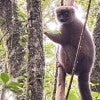
Strawberry guava prevents natural forest generation in Madagascar
Rice researchers find that strawberry guava, an invasive plant, can prevent natural forest generation in areas of Madagascar's Ranomafana National Rainforest, even decades after deforestation has ended.

Rice joins national team studying how energy moves through materials
Rice materials scientists Boris Yakobson and Ming Tang are part of a multi-university team selected for a Multidisciplinary University Research Initiative award from the Office of Naval Research.