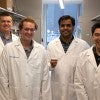
A team of researchers at Rice has developed an innovative AI-enabled, low-cost device that will make flow cytometry ⎯ a technique used to analyze cells or particles in a fluid using a laser beam ⎯ affordable and accessible.
Xinwu Qian, assistant professor of civil and environmental engineering at Rice University, is spearheading research that reimagines how and where charging stations should be deployed.
Avantika Gori, an assistant professor of civil and environmental engineering at Rice University, is leading an innovative project to address flooding in rural communities.
The Rice Department of Computer Science and Ken Kennedy Institute invite Houston industry and community partners to an evening discussion on LLMs, DeepSeek and the future of generative AI.
Rice computer scientist Lydia Kavraki has been elected to the National Academy of Engineering, one of the highest professional honors accorded to an engineer, for her work on “developing randomized motion-planning algorithms for robotics and robotics-inspired methods in biomedicine.”
Rice’s Naomi Halas is the recipient of the 2025 Benjamin Franklin Medal in Chemistry, awarded “for the creation and development of nanoshells — metal-coated nanoscale particles that can capture light energy — for use in many biomedical and chemical applications.”
Rice’s John Mellor-Crummey was honored in January with a Secretary of Energy Achievement Award as a member of the leadership team of the Department of Energy’s seven-year, $1.8 billion Exascale Computing Project.
Rice researchers have developed a tool designed to make identifying and analyzing research security risks more efficient and effective. The new tool, called PRISM (Preventive RISk Monitoring), leverages advanced artificial intelligence technologies to help with rapidly evolving federal regulations and protect against potential reputational and financial risks.
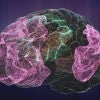
Four Rice research groups are part of an inaugural cohort of 18 projects funded by the U.K.’s Advanced Research and Invention Agency to unlock cutting-edge brain-interfacing technologies.
Rice is a hub of cutting-edge, multidisciplinary research on the brain. In addition to a critical mass of researchers in the field, Rice is home to entities dedicated to collaborative clinical and scientific research on the brain.