
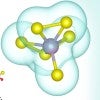
Rice lab improves recipe for valuable chemical
Rice University theorists show why salt gives a significant speed boost to valuable 2D molybdenum disulfide, an effect they say may work for other 2D materials as well.
Rice lab improves recipe for valuable chemical
Rice University theorists show why salt gives a significant speed boost to valuable 2D molybdenum disulfide, an effect they say may work for other 2D materials as well.

Inspired students make intubation more intuitive
Rice University engineering students develop a simplified, wireless video laryngoscope to help clinicians intubate patients before procedures or in an emergency.

Thanks to their groundbreaking research, McMurtry College junior Karen Wang and Sid Richardson College junior Joseph Asfouri were both recently awarded Goldwater Scholarships, America’s most prestigious awards for undergraduates studying natural sciences, engineering and mathematics.

Kaiyuan Yang wins NSF CAREER Award
Electrical and computer engineer Kaiyuan Yang wins a National Science Foundation CAREER Award.

A new view for science and engineering
Luay Nakhleh, the William and Stephanie Sick Dean of the George R. Brown School of Engineering, toured the construction site of the new Engineering and Science Building on April 5.
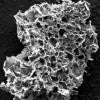
Treated plastic waste good at grabbing carbon dioxide
Rice University chemists treat waste plastic to absorb carbon dioxide from flue gas streams more efficiently than current processes.

Georgia Tech team wins Rice360 Design Competition
A Georgia Tech team won Rice360’s annual undergraduate design competition for global health technologies.

Living sensor research wins federal backing
Rice researchers are leading a federally funded project to improve communications between microelectronics and microorganisms.

NSF backs study of Mississippi River’s response to climate change
Rice climate scientists and engineers are studying how climate change will impact Mississippi River flooding.
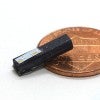
Blood vessels are guides for stimulating implants
A wireless neurostimulator a little bigger than a grain of rice can be put in place alongside blood vessels to treat neurological diseases and chronic pain.

US News grad school rankings give high marks to Rice programs
A total of 19 graduate programs at Rice University rank among the nation's top 25 in their categories in the latest edition of U.S. News and World Report’s “Best Graduate Schools.”
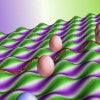
Don’t underestimate undulating graphene
A theory by Rice University scientists suggests putting graphene on an undulating surface stresses it enough to create a minute electromagnetic field. The phenomenon could be useful for creating 2D electron optics or valleytronics devices.

Wind, solar could replace coal power in Texas
A fraction of the wind and solar projects already proposed in Texas could eliminate the state’s remaining coal power plants and their emissions, according to Rice University engineers.

Thomas Senftle wins NSF CAREER Award
Rice University chemical and biomolecular engineer Thomas Senftle has won a National Science Foundation CAREER Award to advance machine learning techniques for designing new catalysts.
Saudi Aramco joins Rice University’s Carbon Hub
Saudi Aramco joins Rice’s Carbon Hub research initiative to accelerate the energy transition by developing sustainable uses of hydrocarbons.