The website functions like a digital museum exhibit, offering story maps, GIS map visualizations and advocacy tools to help communities understand and respond to potential environmental risks.
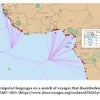
John Mulligan, a humanities computing researcher and facilitator in Rice University’s Center for Research Computing (CRC), was awarded first place in the data visualization category at the Practice and Experience in Advanced Research Computing (PEARC) conference for work with Rice’s SlaveVoyages.
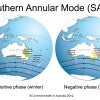
Rice researchers have discovered a natural cycle that repeats every 150 days in the north-south oscillation of the Southern Hemisphere’s prevailing westerly winds.
Evelyn Tang, an assistant professor of physics and astronomy and a member of Rice University’s Center for Theoretical Biological Physics, is one of 17 early-career researchers to receive a $50,000 award in the inaugural year of the Scialog: Molecular Basis of Cognition initiative, which will begin with a conference Oct. 12-15 in Tucson, Arizona.
A Rice University musicologist and history professor are among the recipients of 2023 grants from the National Endowment for the Humanities (NEH) for their research projects on televised opera and tracking historical slave trading voyages.
Melissa Cragin, a veteran of both the San Diego Supercomputer Center and the National Center for Supercomputing Applications at the University of Illinois at Urbana-Champaign, is now leading Rice's Center for Research Computing as Rice's associate vice president of research computing.
Rice computer scientists introduce Variabel, which uses sequencing data to identify “low-frequency variants” of SARS-CoV-2 in public data sets. The program has also been tested on data from patients with Ebola and norovirus.
The Race and Anti-Racism Research Fund at Rice University has awarded grants to eight professors to develop better understanding of how race, racism and racial injustice affect society.