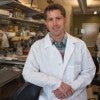
Rice University chemist Han Xiao and biologist Xiang Zhang at Baylor College of Medicine have won a $2.3 million Department of Defense grant to expand their efforts to halt bone cancer metastasis.
Hydrogels developed at Rice University mimic intestines when lined with epithelial cells. A study by Rice and Baylor College of Medicine proved hydrogels in various stiffnesses are valuable for learning the dynamics of pathogens that cause diarrhea and other intestinal diseases.
Rice's Educational and Research Initiatives for Collaborative Health has announced six seed grants for research collaborations between faculty from Rice and the Texas Medical Center.
The little things of life mean a great deal to Julea Vlassakis, who will bring her study of protein complexes and their role in cancer proliferation to Rice University this year.
Rice University bioengineers collaborated on a six-year study that systematically analyzed how the surface architecture of silicone breast implants influences adverse side effects.
Rice University bioengineer Gang Bao, a pioneer in the search for a way to treat and perhaps cure sickle cell disease, is co-author of a significant step forward revealed in Science Translational Medicine and led by his colleagues at Stanford University.
Computer scientist Lydia Kavraki of Rice University’s Brown School of Engineering has won a prestigious National Institutes of Health U01 grant to develop a new approach to model and analyze protein-ligand interactions in cancer research.