

Maria Elena Bottazzi, an internationally recognized vaccine scientist and advocate for equitable access to global health innovations, delivered the Oct. 21 lecture in the Rice360 Institute for Global Health Technologies seminar series.
Maria Elena Bottazzi, an internationally recognized vaccine scientist and advocate for equitable access to global health innovations, delivered the Oct. 21 lecture in the Rice360 Institute for Global Health Technologies seminar series.

Innovation for Healthcare Access Conference inspires new partnerships for sustainable change
At the 2025 Innovation for Healthcare Access Conference, held Oct. 27-28 at Rice, leaders from academia, medicine, public health and policy converged to tackle one of the most urgent challenges in health care: how to ensure that innovations not only reach the communities that need them most but also endure long after the pilot projects end.

Rice launches Brain Institute to accelerate discoveries in brain science and health
Rice has announced the creation of the Rice Brain Institute, an ambitious, interdisciplinary hub that unites faculty members across campus, including engineering, natural sciences and social sciences, to tackle one of humanity’s most complex and promising frontiers: the brain.

Lighting up life: Rice scientists develop glowing sensors to track cellular changes as they happen
Researchers at Rice have engineered living cells to use a 21st amino acid that illuminates protein changes in real time.

Innovation to impact: Richards-Kortum previews Rice360’s Innovation for Healthcare Access Conference
Ahead of the Innovation for Healthcare Access Conference hosted by Rice360, Rebecca Richards-Kortum shares insights on advancing equitable health care solutions across Texas and the United States.

Engineering their next play: Student-athletes pursue their professional dreams through Rice program
For Rice student-athletes Omari Porter, David Kasemervisz and Matthew Aribisala, football and engineering aren’t competing priorities — they’re complementary pursuits. Each came to Rice to push their limits both on the field and in the classroom, and each found a university uniquely equipped to help them do both.

Richards-Kortum elected to the National Academy of Medicine
Rice's Rebecca Richards-Kortum has been elected to the National Academy of Medicine (NAM), one of the nation’s highest honors in health and medicine. She is one of two Rice faculty who are the only Texas researchers to share membership across the national academies of medicine, science and engineering — an honor held by fewer than 35 researchers nationwide.

Xiao receives David W. Robertson Award for Excellence in Medicinal Chemistry
Rice’s Han Xiao has been awarded the David W. Robertson Award for Excellence in Medicinal Chemistry.
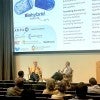
Rice hosts ARPA-H summit on future of implantable biohybrid devices
Rice hosted the second Advanced Research Projects Agency for Health Biohybrid Devices Summit Sept. 25-26 in Houston to support research and translation in implantable devices that function as “living pharmacies.”

New one-hour, low-cost HPV test could transform cervical cancer screening in Africa and beyond
A team of researchers led by Rice, in collaboration with colleagues in Mozambique and the University of Texas MD Anderson Cancer Center, has developed a simple, affordable human papillomavirus (HPV) test that delivers results in less than an hour with no specialized laboratory required.
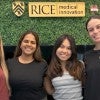
2 Rice teams named finalists in Collegiate Inventors Competition
Two student teams from Rice have been named finalists in the 2025 Collegiate Inventors Competition, a program by the National Inventors Hall of Fame.

Brain inflammation treatment could be ally in fight against dementia
Scientists from Rice and Houston Methodist have developed a new way to reduce inflammation in the brain, a discovery that could help fight diseases such as Alzheimer’s and Parkinson’s.

Biotechnology Innovation Organization president and CEO John F. Crowley visited Rice as part of a tour highlighting regional biotech hubs across the country.
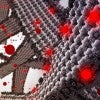
Rice scientists develop hydrogel platform for long-lasting, precision drug delivery
Rice scientists have developed a new drug delivery platform that could make it easier for patients to take their medications and may even boost drug efficacy.

Wireless implant network could transform cardiac, neurological care
Researchers at Rice and collaborators have developed a wireless network of miniature bioelectric implants that could transform treatment for heart failure, spinal cord injury and other chronic conditions. The system would integrate with patient anatomy easier than conventional medical implants, eliminating the need for batteries and invasive wiring.