The founding partners of the National Science Foundation Southwest I-Corps Node, co-established by Rice University, have been awarded a $15 million grant to form a hub that will expand the partnership to five additional universities.
Researchers at Rice University will team with counterparts at MD Anderson to improve cancer therapy with the support of seed funding from the John S. Dunn Foundation.
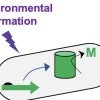
Rice University receives National Science Foundation support to turn living cells, starting with bacteria, into random-access memory devices. These will be able to store and report data about their environments.
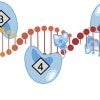
Bioengineers used deactivated Cas9 fusion proteins to synthetically control gene expression and reveal new details about natural processes in human cells.
Rice engineers introduce DAP, a streamlined CRISPR-based technology that can perform many genome edits at once to address polygenic diseases caused by more than one glitch.