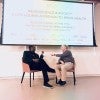
Health, religion and public policy experts discussed the challenges of vaccine hesitancy as well as the upcoming Texas legislative session at the 2024 Texas Vaccine Policy Symposium, hosted by the Center for Health and Biosciences at Rice University’s Baker Institute for Public Policy Nov. 15.
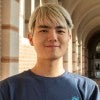
Rice senior Jae Kim ’25 has been awarded a prestigious Rhodes Scholarship, one of just 32 American recipients – and the sole representative from a Texas university – chosen to study at the University of Oxford in England next fall.
The Texas Vaccine Policy Symposium, hosted by Rice’s Baker Institute for Public Policy Nov. 15, will discuss the impact of vaccines in Texas and the challenges ahead as experts look toward the 89th Texas legislative session that starts in January.
Nonpartisan data and insights on the top issues of the upcoming election such as U.S. fiscal, science and technology, energy transition and school choice policy are available in Election 2024: Policy Playbook, a series of policy briefs presented jointly by Rice and the Baker Institute for Public Policy. The series offers critical context, analysis and recommendations to equip policy leaders governing the U.S. and Texas in 2025.
Hospital service prices surged more than 220% between 2000 and 2022, according to a report from Rice’s Baker Institute for Public Policy. While hospitals attribute rising prices to increased operating costs — particularly due to labor shortages from the pandemic — evidence shows that hospital prices have consistently risen faster than other medical services since 2006, according to the authors.
Including religious identities in diversity, equity and inclusion efforts could positively impact workplace culture and communities as a whole, according to newly published research from Rice University’s Boniuk Institute for the Study and Advancement of Religious Tolerance.
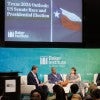
Top Texas political journalists gathered at Rice’s Baker Institute for Public Policy Oct. 8 to analyze the key factors shaping both the Texas U.S. Senate and presidential elections.
Energy leaders from academia and industry convened at the eighth annual Energy Summit, hosted by Baker Botts and the Center for Energy Studies at Rice’s Baker Institute. This two-day event united experts to explore the future of the global energy landscape, fostering vital discussions and innovative solutions.
French Ambassador to the U.S. Laurent Bili will discuss the evolving roles of diplomacy, strategic alliances, global economics and climate change at an Oct. 9 event at Rice University’s Baker Institute for Public Policy co-hosted by Rice Global.
Neuroscience experts from government, business, finance, banking and philanthropy came together at the inaugural Brain Days of the 79th United Nations General Assembly Science Summit to discuss the global “brain economy transformation.” The role of the human brain in the wider economy is drawing increased attention, and brain capital is becoming a priority for nations, businesses and individuals.
Former CIA Director and retired Army General David Petraeus will speak on the Ukraine conflict and U.S. withdrawal from Afghanistan Sept. 24 at Rice University’s Baker Institute for Public Policy.