


Rice sociologist investigating how features of the built environment — like dead-end streets, highways, fences and railroad tracks — shape patterns of neighborhood separation and access to opportunity across U.S. cities.
Paul Smith's bases-loaded, two-out walk in the bottom of the 10th gave Rice a 3-2 win over UTSA in the series opener between the schools at Reckling P...

“Gender and sexuality studies is social theory made accessible,” said Lora Wildenthal, the John Antony Weir Professor of History and director of Rice’...
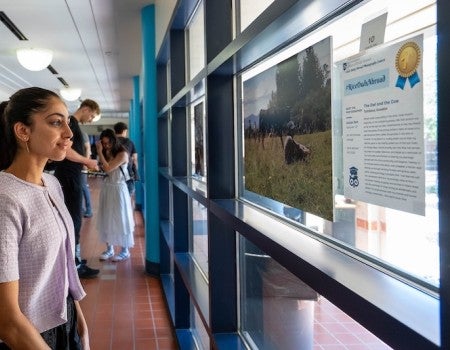
The global journeys of Rice University students were on display March 27 as the Office of Study Abroad hosted the 2026 Study Abroad Photo Contest Exhi...
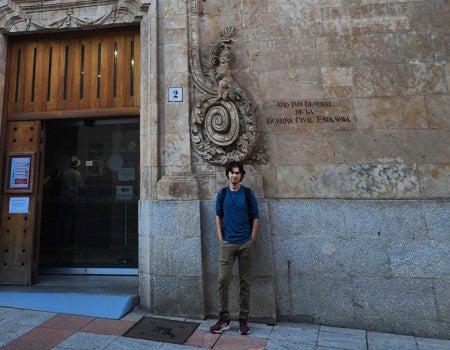
“I feel really grateful for the opportunities that I’ve had now that I am here," said senior Michael Garcia....
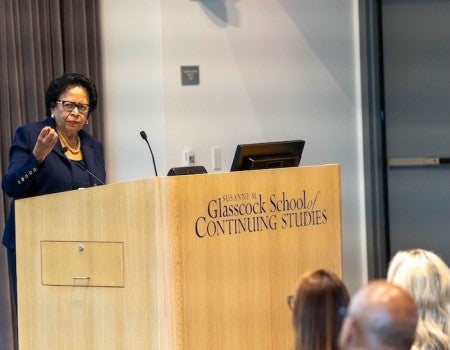
The Center for Philanthropy and Nonprofit Leadership at Rice’s Susanne M. Glasscock School of Continuing Studies welcomed nonprofit leaders from acros...
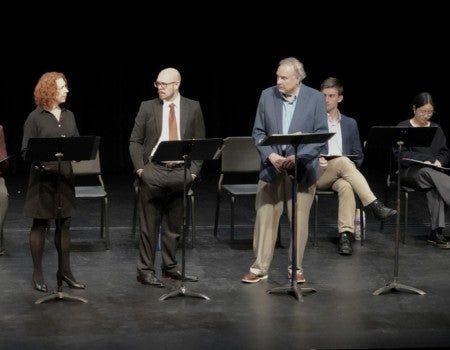
The Olivier Award-nominated play traces the rise and fall of the Houston-based energy trading giant, translating complex financial systems into a fast...

New consumable hemp rules from the Texas Department of State Health Services are officially in effect, and the biggest change comes down to how THC is...
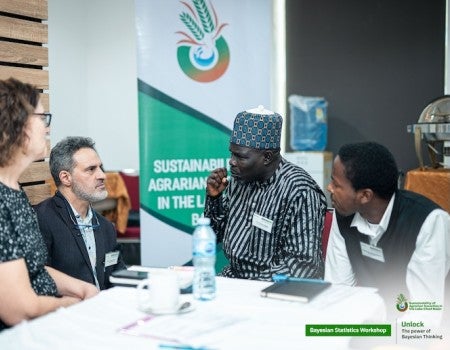
For more than a decade, Rice’s Frederi Viens has been studying Lake Chad, a vast freshwater lake in west-central Africa that borders Nigeria, Niger, C...

The Center for Energy Studies at Rice’s Baker Institute for Public Policy and the University of Houston Energy Transition Institute are launching a st...
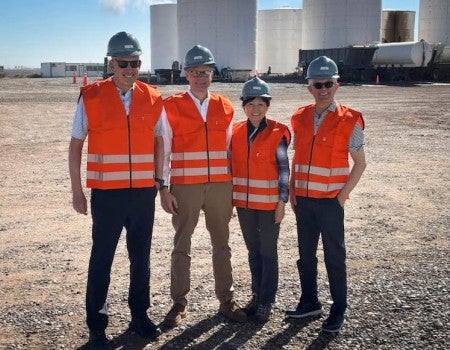
A delegation of researchers from Rice’s WaTER Institute traveled to Argentina’s Neuquén province this month to help address a pressing question facing...
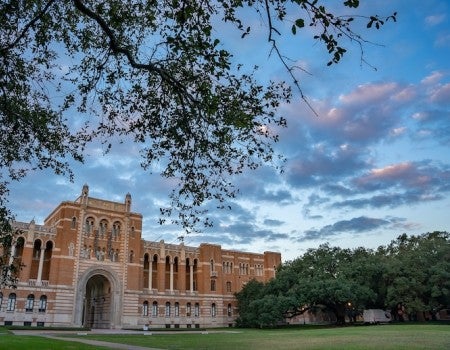
Rice’s open enrollment period for employee benefit plans will run from April 3-17. To give employees a way to better explore their benefits options, t...
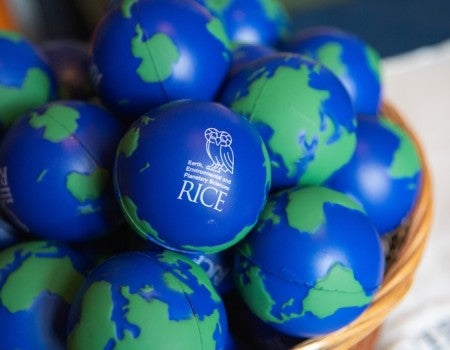
Rice's Office of Sustainability invites the campus community to join the third annual Earth Month Kick-Off Festival from 12:30-3:30 p.m. April 1 at th...
Rice sociologist investigating how features of the built environment — like dead-end streets, highways, fences and railroad tracks — shape patterns of neighborhood separation and access to opportunity across U.S. cities.

Rice rises in US News rankings, recognized for value, teaching and innovation
Rice continues its upward trajectory in national and international rankings, earning the No. 17 spot in the 2026 U.S. News & World Report Best Colleges rankings.

Rice convenes leaders to tackle urgent water challenges
Rice is fostering sustainable water and energy solutions by convening leaders across industry, policy and research to confront one of the most pressing challenges of our time: water scarcity and resilience.

Rice undergraduate builds tool to help NASA scientists monitor microbes in space
Rice junior Ankhi Banerjee spent 10 weeks over the summer building a data-analysis pipeline to help NASA Johnson Space Center scientists track microbes aboard the International Space Station.

Rice partners with Locksley Resources to advance US critical materials processing, energy innovation
Rice has entered into a research partnership with Locksley Resources Ltd.

Finance, computer expert Malamud to present lecture series at Rice Business
Semyon Malamud, senior chair at the Swiss Finance Institute and associate professor of finance at École Polytechnique Fédérale de Lausanne, will host a series of lectures at Rice Business as part of the Dean’s Distinguished Visiting Fellows Program.

A new chapter: Rice’s School of Humanities becomes School of Humanities and Arts
To recognize a growing investment in the visual arts and creative writing, Rice’s School of Humanities is changing its name to the School of Humanities and Arts.

Rice takes down Charlotte to open American play
The Rice Owls defeated Charlotte 28-17 in its American Conference opener on Thursday night.

For decades, researchers believed that Homo habilis — the earliest known species in our genus — marked the moment humans rose from prey to predators, but new findings from a team led by a Rice anthropologist challenge that view.

Researchers led by Rice’s Yong Lin Kong have developed a soft but strong metamaterial that can be controlled remotely to rapidly transform its size and shape.