
Frank Klaus Tittel, a physicist whose career paralleled the rise of modern laser technology and who helped build Rice’s reputation in laser spectrosc...
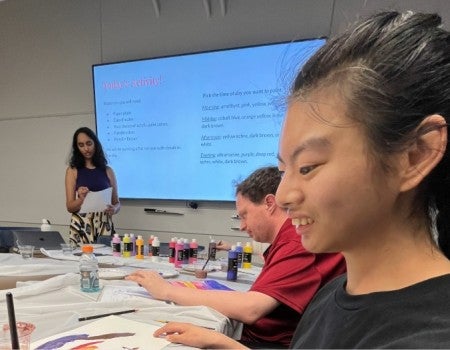
Art teachers, artists and comics enthusiasts gathered at Rice University Feb. 20 for Teaching Comics, a one-day symposium exploring how comics can fun...
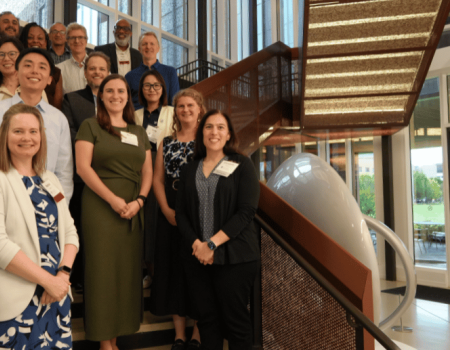
Nearly 700 prospective graduate students, current scholars, faculty and staff gathered at the Houston Museum of Natural Science for Rice University’s ...
Undergraduates at Rice are digging into real, possible wrongful conviction cases this semester, examining evidence to bring renewed attention to indiv...
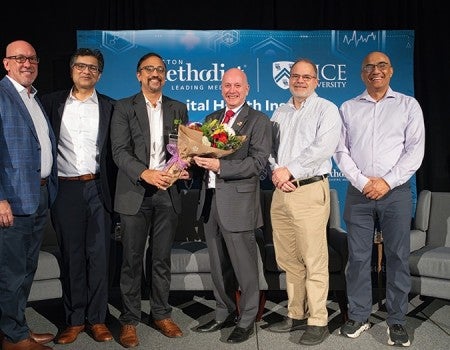
Rice President Reginald DesRoches was honored with a Community Trailblazer Award Feb. 19 by the city of Houston’s controller Chris Hollins during his ...
Rice commends Stacy Mosely for 14 years of service. As executive senior associate athletic director/senior woman administrator, Mosely maintains admin...
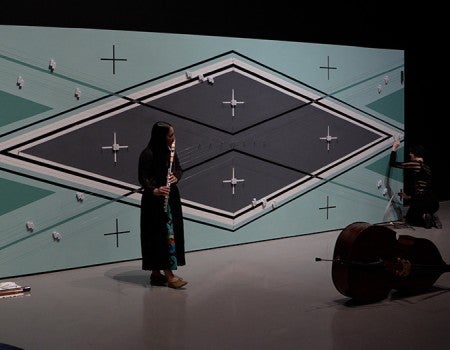
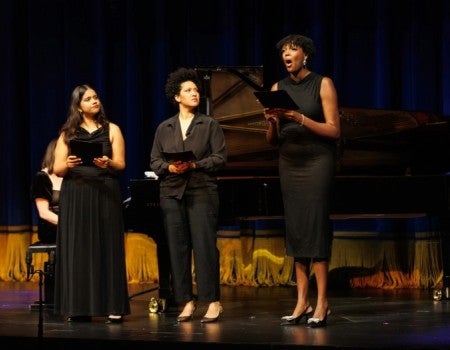
Students convened at Rice University Feb. 20 for what organizers called a rare chance to hear and learn directly from one of the most influential musi...
John Green, the No. 1 New York Times bestselling author, influential educator and global YouTube phenomenon, will serve as the speaker for Rice's 113t...
A Rice research lab’s signature keepsake helped perfect a method for growing patterned diamond surfaces that could help decrease operating temperature...
Rice is an academic partner of CERAWeek, with the university's Energy and Natural Resources Initiative spearheading its involvement. The annual conference, which usually takes place in Houston, will be held online this year because of the COVID-19 pandemic.
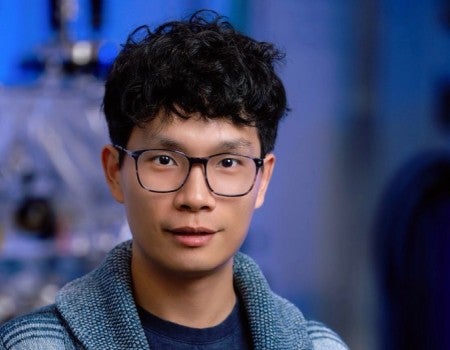
Rice University physicists have discovered a way to trap the world's coldest plasma in a magnetic bottle, a technological achievement that could advance research into clean energy, space weather and astrophysics.
In a twist befitting the strange nature of quantum mechanics, physicists have discovered the Hall effect — a characteristic change in the way electricity is conducted in the presence of a magnetic field — in a nonmagnetic quantum material to which no magnetic field was applied.
A Rice computer science lab challenges -- and beats -- deep learning in a test to see if a new bioinformatics approach effectively tracks the lab of origin of a synthetic genetic sequence.