

Rice’s school of engineering changes its name to reflect excellence in computing
Rice’s school of engineering has officially changed its name to the George R. Brown School of Engineering and Computing.
Rice’s school of engineering changes its name to reflect excellence in computing
Rice’s school of engineering has officially changed its name to the George R. Brown School of Engineering and Computing.

Rice center identifies top hazardous polluters in path of Tropical Storm Helene
Recent projections show that Tropical Storm Helene, the latest storm brewing in the Gulf of Mexico, is heading for Florida and tracking toward the state’s panhandle.

Rice in top 20 of US News ‘Best Colleges’ rankings
Rice is No. 18 in the 2025 U.S. News “Best Colleges” rankings and stands out in the top 10 for both best value and undergraduate teaching programs.

David Petraeus to speak at Rice’s Baker Institute Sept. 24
Former CIA Director and retired Army General David Petraeus will speak on the Ukraine conflict and U.S. withdrawal from Afghanistan Sept. 24 at Rice University’s Baker Institute for Public Policy.

Rice researchers uncover key insights into cholesterol’s structure in cell membranes
A new study by Rice researchers could open new pathways for understanding how cholesterol influences cell membranes and their receptors.

Rice Theatre is thrilled to announce its production of William Shakespeare’s “The Comedy of Errors,” a masterful blend of wit, whimsy and wordplay that promises to enchant audiences with its delightful pandemonium.

Obama’s 2012 reelection tied to better mental health in educated Black men, study suggests
Following Barack Obama’s reelection as U.S. president in 2012, the mental health of college-educated Black men improved significantly.

Former U.S. Ambassador to Russia John Sullivan will speak at Rice University’s Baker Institute for Public Policy today about the ongoing conflict between Ukraine and Russia and reflect on his memoir, “Midnight in Moscow.”

Ken Kennedy Institute’s annual conference informs the future of AI in health innovation
Rice’s Ken Kennedy Institute hosted the third annual AI in Health Conference Sept. 9-12, welcoming over 470 participants to Houston to explore the latest advancements in artificial intelligence.

Rice and Baylor College of Medicine have received $2.8 million from the NIH for research on reducing inflammation and lung damage in acute respiratory distress syndrome patients.
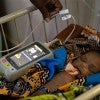
Rice360 inaugurates conference on newborn, maternal health care innovation
Rice360 will host the first edition of Innovation for Day One Sept. 25-27.

$7.5M DOD grant backs ‘revolutionary’ multi-university research
Naomi Halas will lead a multi-university research project backed by a prestigious $7.5 million award from the Department of Defense.
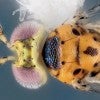
Another new wasp species discovered by researchers on Rice campus
A newly identified wasp species has been discovered on the university grounds.

Rice expert available to discuss House bill on workforce and AI
Rice’s Fred Oswald is available to comment on the Workforce for AI Trust Act.

Rice launches ‘Policy Playbook’ with expert nonpartisan insights on key issues before the election
Nonpartisan data and insights on the top issues of the upcoming election such as the southern border, energy sustainability and resilient communities are available in ”Election 2024: Policy Playbook,” a new series of policy briefs presented jointly by Rice and the Baker Institute for Public Policy. The series offers critical context, analysis and recommendations to equip policy leaders governing the U.S. and Texas in 2025.