Tuberculosis bacteria have evolved to remember stressful encounters and react quickly to future stress, according to a study by computational bioengineers at Rice University and infectious disease experts at Rutgers New Jersey Medical School.
Sustainability across the entire value chain — rather than advances in technology alone — is required to solve the United States’ plastic waste problems, according to a new brief from Rice's Baker Institute for Public Policy.
The Rice Business Plan Competition — the world's largest and richest student startup competition — will announce the teams invited to participate in this year's edition on Friday.
Competition with China is the United States' "existential challenge now and for the next three or four decades" and must be addressed by the White House immediately, according to a new report from Rice University's Baker Institute for Public Policy.
An algorithm by Rice University scientists predicts the structures and melting temperatures of collagen, the triple helix that accounts for about a third of the body’s proteins and forms the fibrous glue in skin, bones, muscles, tendons and ligaments.
Inequities in marijuana policy persist because of a failure to center reform around racial justice, according to a new report by experts at Rice's Baker Institute for Public Policy in the American Bar Association publication The Judges’ Journal.
Kirsten Siebach, a Martian geologist at Rice University, is available to speak with the media before NASA’s next Mars rover, Perseverance, lands on Feb. 18.
Members of Rice's Department of Chemistry put forth a video “choose-your-own-adventure” strategy to help undergraduate students conduct virtual experiments.
The United States must focus on improving infrastructure as it recovers from the COVID-19 pandemic, and the top priorities include increasing broadband access, expanding public transportation, and improving emergency response and health care facilities, according to a new survey and report from Rice's Kinder Institute for Urban Research.
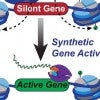
Rice bioengineers harness the CRISPR/Cas9 system to program histones, the support proteins that wrap up and control human DNA, to manipulate gene activation and phosphorylation. The new technology enables innovative ways to find and manipulate genes and pathways responsible for diseases.