
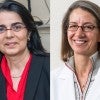
IEEE honors Kavraki, Richards-Kortum, Truchard
Two renowned Rice University professors and a longtime backer have won prestigious honors in the 2023 IEEE Awards.
IEEE honors Kavraki, Richards-Kortum, Truchard
Two renowned Rice University professors and a longtime backer have won prestigious honors in the 2023 IEEE Awards.
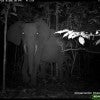
Tropical wildlife follow the same daily patterns worldwide
A massive study of rainforest species across three regions of the world finds striking similarities in how animals spend their days.
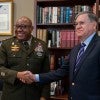
Rice, Baker Institute sign MOU with US Army
Representatives from the U.S. Army joined David Satterfield, director of Rice’s Baker Institute for Public Policy, on Nov. 28 to sign a memorandum of understanding for the institute to provide expertise to support the Army Civil Affairs Psychological Operations Command.
New Rice policies to support stipend and improve graduate student experience
Rice Provost Amy Dittmar and Dean of Graduate and Postdoctoral Studies Seiichi Matsuda provided a message to the Rice community in an email Nov. 23.

Rice to start NCAA volleyball tournament against Colorado
Rice was placed in Waco for the first and second rounds of the NCAA women’s volleyball tournament and will start against the University of Colorado Boulder Dec. 1.
A crystal shape conundrum is finally solved
Rice researchers learn to predict how crystals take shape from their internal chemistry, even when the crystal lacks symmetry.

Baker Institute event: COVID-19’s impact on Muslim world
The effects of the COVID-19 pandemic on religiosity and practices in the Muslim world will be discussed in a Nov. 29 event at Rice University’s Baker Institute for Public Policy.

Rice lab’s catalyst could be key for hydrogen economy
A light-activated catalyst efficiently converts ammonia into clean-burning hydrogen using only inexpensive raw materials.
Strategic planning process to be launched in January
President Reginald DesRoches shared the news with the Rice community in an email Nov. 21.
Shepherd School students riff on Moody’s ‘Urban Impressions’
Art and music aficionados alike flocked to the Moody Center for the Arts Nov. 19 for an afternoon of live performances and original compositions by Shepherd School of Music students, each piece created in response to the Moody’s current fall exhibition.

Douglas Brinkley nominated for two Grammys
Rice historian Douglas Brinkley is once again a Grammy nominee. Brinkley, the Katherine Tsanoff Brown Professor of Humanities, will be up for awards in two categories at the Feb. 5 ceremony in Los Angeles.
Masha Gessen visits to talk war in Ukraine, tools to fight totalitarianism
Renowned author and journalist Masha Gessen led two consecutive nights of thought-provoking, wide-ranging discussions Nov. 7-8 at Rice as the latest speaker in the School of Humanities Campbell Lecture Series.

Scientia Institute’s lecture series reflects Houston, Rice and race
The Scientia Lecture Series: Betterment of the World’s latest edition featured faculty from the School of Humanities to discuss “Houston, Rice and Race: A History of the Fourth Ward.”

Basketball teams post perfect weekend
The Rice men’s and women’s basketball teams went a combined 3-0 over the weekend.
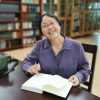
Rice mourns beloved Chinese literature professor Nanxiu Qian
Nanxiu Qian, professor of Chinese literature in the School of Humanities, died Nov. 16 after a lengthy battle with cancer. She was 75.