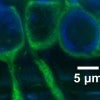
Rice University researchers already knew the atoms in perovskites react favorably to light. Now they’ve seen precisely how the atoms move when the 2D materials are excited with light. Their study this week in Nature Physics details the first direct measurement of structural dynamics under light-induced excitation in 2D perovskites.
In October 2020, a highly magnetic neutron star called SGR 1935+2154 abruptly began spinning more slowly. In a Nature Astronomy study this month, Rice astrophysicist Matthew Baring and colleagues showed the magnetar’s rotational slowdown could have been caused by a volcanolike rupture near its magnetic pole.
Rice University has promoted nanotechnology pioneer Naomi Halas to its highest academic rank, University Professor. Halas, a 33-year member of Rice’s faculty, becomes only the 10th person and second woman to earn the title in Rice’s 111-year history.
Rice University structural engineer Jamie Padgett has received the 2023 Edith and Peter O’Donnell Award in Engineering from The Academy of Medicine, Engineering and Science of Texas.
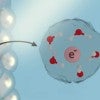
Rice bioengineers and applied physicists, together with and colleagues at the University of Chicago and the University of Illinois Chicago, have unlocked the mechanism of the fastest synapses in the human body.
A previously hidden mechanism in the inner ear that helps mammals balance via the fastest-known signal in the brain, and researchers from Rice University, the University of Chicago and the University of Illinois Chicago have modeled a hidden mechanism in the inner ear that helps mammals balance via the fastest-known signal in the brain.
Chemists from Rice, UT Austin and Stanford have uncovered the long-sought mechanism of a light-driven process that creates solvated electrons, inherently clean chemical reactants that are attractive for green chemistry.
A first-of-its-kind study suggests climate warming could reduce organic carbon burial and increase the amount of carbon that’s returned to the atmosphere.
Rice synthetic biologists have uncovered new capabilities of a genetically encoded sensor that allows salmonella, E. coli and other pathogens to sicken millions of people each year.
Rice and Houston Methodist have awarded seed grants for research in robotics, imaging, cardiovascular bioengineering, and psychological and behavioral health.
Rice bioengineers, synthetic biologists and cancer researchers celebrated the opening of Rice’s first CPRIT Core Facility, the Genetic Design and Engineering Center, or GDEC, Nov. 10 at the BRC.