The 2022 Rice Business Plan Competition (RBPC), hosted by the Rice Alliance for Technology and Entrepreneurship and the Jones Graduate School of Business, will be back in person and on campus April 7-9.
The Provost’s Office and the Liu Idea Lab for Innovation & Entrepreneurship (Lilie) have announced the inaugural class of Rice Innovation Fellows, a program that will provide educational and financial support to the next generation of scientist- and engineer-led spinout ventures.
Last February’s severe winter storm caused sustained peaks in demand for electricity across Texas, triggering tremendous stress on the state’s power grid and widespread outages lasting days. Now a new report from Rice University’s Baker Institute for Public Policy examines why the winter storm caused this deadly electricity supply crisis and how it could have been avoided.
Tom Kolditz, director of Rice University's Ann and John Doerr Institute for New Leaders, has announced his departure from Rice effective June 30, 2022. He will remain with the institute as a member of its external advisory board.
OpenStax, Rice University’s educational technology initiative, and the Texas Higher Education Coordinating Board (THECB) will host a free, virtual event for Texas educators to create and revise open educational resources (OER) Feb. 17 and 18.
Investments in oil and gas have decreased in favor of alternative energy in recent years, but with alternative energy technologies still able to supply only a small fraction of useable energy, rushing the transition would be a costly mistake, according to a new report from Rice University’s Baker Institute for Public Policy.
Access to the gig economy may help facilitate the creation of new businesses, according to a new study. The gig (or short-term job) market is often more transitory than the traditional freelancing market. The flexibility and low barrier to entry of these jobs gives would-be entrepreneurs fallback opportunities that reduce their financial risk, argues Yael Hochberg, professor in entrepreneurship and finance at Rice University's Jones Graduate School of Business.
A report from Alessandro Piazza, assistant professor of strategic management at Rice University's Jones Graduate School of Business; Brian Chung, doctoral candidate at Rice Business; and Dortmund University’s Daniel Reese analyzed data on 4,190 new ventures and their founders. They found that “expertise signaling” by founders — self-presentation that might not align with reality when it comes to their experience, skills or background — played a significant role in their companies' success.
COVID-19 hasn't stopped students at Rice's Glasscock School of Continuing Studies from continuing their lifelong-learning journeys, including a centenarian who has taken courses almost every semester for a decade.
While some organizational decision-makers focus their attention on capital and physical resources, a new book reveals that effective people management should take center stage in the innovation process.
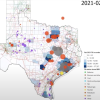
What happened to electrical power in Texas during last February's freeze? A new time-lapse video of electricity generation created by experts at Rice University’s Baker Institute for Public Policy offers an hour-by-hour picture of power plant and customer outages across the state during the devastating storm.
A new, interactive energy map for the United States has just been released by Rice University's Baker Institute for Public Policy, providing an open-source visualization of the country’s energy infrastructure and demography designed to highlight the intersection of energy, environment, policy and society.
Rice University’s Jones Graduate School of Business ranks in the top 10 in five categories in The Princeton Review’s Best Business Schools 2022 rankings.
Oil’s role in the global energy transitions will be the focus of an upcoming virtual and in-person event from Rice University’s Baker Institute for Public Policy.
The Doerr Institute for New Leaders at Rice University is expanding its CoachRICE leadership coaching program, providing other institutions of higher education with training to improve how they develop students as high-potential leaders.