

Robotic cup helps wheelchair users stay hydrated
Rice undergraduate engineering students Thomas Kutcher and Rafe Neathery designed a robotic device that enables people with limited mobility to stay hydrated without caretaker help.
Robotic cup helps wheelchair users stay hydrated
Rice undergraduate engineering students Thomas Kutcher and Rafe Neathery designed a robotic device that enables people with limited mobility to stay hydrated without caretaker help.
DNA test could broaden access to cervical cancer screening
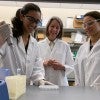
Rice bioengineers have demonstrated a low-cost, point-of-care DNA test for HPV infections that could make cervical cancer screening more accessible in low- and middle-income countries where the disease kills more than 300,000 women each year.

Rice U. students design congenital hypothyroidism test for newborns
A team of Rice University students developed a low-cost, point-of-care screening tool that can diagnose congenital hypothyroidism in low-resource areas.

Duncan, Spiegel honored at Rice360 awards breakfast
The Rice360 Institute for Global Health Technologies presented its 2023 Global Champion Award to philanthropist Jan Duncan and its 2023 Alumni Leadership Award to physician Elizabeth Spiegel ’11 at its graduate recognition and awards breakfast May 5.

WashU team wins Rice360 global health tech design competition
First place honors at Rice360’s annual Global Health Technologies Design Competition went to a team of Washington University in St. Louis undergraduates who created an innovative and discrete urine collection system that would allow mothers to avoid the stigma and embarrassment from incontinence that can result from prolonged, obstructed labor.
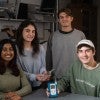
A new medical device developed by Rice University students will help premature babies in developing countries receive life-saving oxygen without damaging their eyesight.

IEEE honors Kavraki, Richards-Kortum, Truchard
Two renowned Rice University professors and a longtime backer have won prestigious honors in the 2023 IEEE Awards.

People, papers and presentations for Sept. 12, 2022
Rice statisticians Katherine Ensor and Loren Hopkins and civil and environmental engineer Lauren Stadler are co-authors of a commentary in Nature Medicine that issues an urgent call to scale up wastewater monitoring to detect early signs of disease.
Interns bring innovative design to health technology engineering challenges
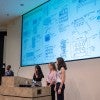
Rice University’s Rice360 Institute for Global Health Technologies and Oshman Engineering Design Kitchen (OEDK) this summer merged two internship programs and brought together 17 students over the course of seven weeks to employ inventive engineering design methods tackling health technology challenges.

Rice360 honors Virginia Sall ’71 with Global Champion Award
Rice360 Institute for Global Health Technologies honored Rice alumnae Virginia Sall and Dr. Tara Barry on May 6.

Georgia Tech team wins Rice360 Design Competition
A Georgia Tech team won Rice360’s annual undergraduate design competition for global health technologies.

NEST360 wins 2021 Innovating for Impact Partnership Award
NEST360, an international alliance with roots at Rice University’s Rice 360º Institute for Global Health, has won the Global Health Technologies Coalition 2021 Innovating for Impact Partnership Award for its efforts to end preventable newborn deaths in African hospitals.
Touchless temperature made simple
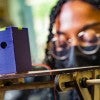
Getting around during the pandemic often requires getting your temperature taken to check for COVID-19. A team of seniors at Rice’s Brown School of Engineering wants to make that practice more practical for facilities around the world.

State of the University: President hails 'remarkable performance'
David Leebron delivered his 2020 State of the University address with a salute to the university’s faculty, staff and students for overcoming the year’s unprecedented challenges.