A $6.25 million National Institutes of Health grant supports Rice U. engineers optimizing a neural probe array that can record the activity of spinal cord neurons as bodies move and behave. Scientists would also develop an integrated data-processing and stimulation-feedback system.
Rice University scientists have found that a boron nitride nanocomposite interacts with light and heat in unexpected ways that could be useful for advanced technology applications.
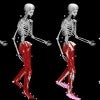
A team of Rice University engineers has launched open-source software that constructs and uses personalized computer models of how individual patients move to optimize treatments for neurologic and orthopedic mobility impairments.
Rice University researchers leverage the quantum properties of strontium titanate to make a broad terahertz frequency range useful for quantum control and sensing applications.
Rice University engineers’ have created a device that turns sunlight into hydrogen with record-breaking efficiency by integrating next-generation halide perovskite semiconductors with electrocatalysts in a single, durable, cost-effective and scalable device.
Rice University’s Michael Wong was named a fellow to the Royal Society of Chemistry, the oldest chemical society in the world, whose mission is to “advance excellence in the chemical sciences.”
An asteroid has been named for Rice planetary scientist André Izidoro, a newly appointed assistant professor in the Department of Earth, Environmental and Planetary Sciences.
The landmark United States Supreme Court ruling in Loving v. Commonwealth of Virginia abolished bans on interracial marriage in the United States in 1967, but a new academic paper from Rice University and Texas A&M University said an uptick in interracial relationships since then has not ended discriminatory tendencies, even among individuals who are in these romantic partnerships.
Rice University bioengineer Gang Bao and his team have won a grant from the National Institutes of Health to address critical questions surrounding the safety and efficacy of using gene editing to treat sickle cell disease.
Rice University chemist Han Xiao has won a $3.2 million research project (R01) grant from the National Cancer Institute to develop the first tissue-specific epigenetic inhibitor drug to treat bone metastasis.
Renowned Rice University computer scientist, mathematician and University Professor Moshe Vardi is on a roll, garnering four prestigious awards in automata theory and automated reasoning within the past four weeks.
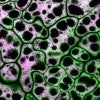
A new study by Rice University bioscientists explains how structures inside plant cells collaborate to fuel germination. The findings could shed light on corresponding mechanisms in human cells.
Rice University scientists have used light-activated molecular machines to induce cell-to-cell calcium signaling, revealing a powerful new strategy for drug design. This technology could lead to improved treatments for people with heart problems, digestive issues and more.