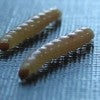
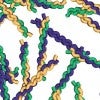
Biologists have used one of nature's most prolific cannibals to show how social structure affects the evolution of selfish behavior. Researchers showed they could drive the evolution of less selfish behavior in Indian meal moths with habitat changes that forced larval caterpillars to interact more often with siblings.
Fish that dine on corals may pay it forward with poop. Rice University marine biologists found high concentrations of living symbiotic algae in the feces of coral predators on reefs in Mo'orea, French Polynesia.
Carbon Hub, Rice University's zero-emissions research initiative, has awarded seed grants for seven projects that will rapidly advance its vision for transforming the oil and gas sector into a leading provider of both clean hydrogen energy and solid carbon products that can be used in place of materials with large carbon footprints.
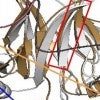
A mutation that replaces a single amino acid in a potent tumor-suppressing protein makes it prone to nucleating amyloid fibrils implicated in many cancers as well as neurological diseases.
Rice University computational astroparticle physicist Christopher Tunnell is getting help in his search for the nature of the universe through a National Science Foundation (NSF) CAREER Award.
HOUSTON – (March 5, 2021) – Even a small effort up front can boost the abilities and confidence of girls as they anticipate taking challenging science courses.
In one of the first studies of its kind, an analysis of camera-trap data from 15 wildlife preserves in tropical rainforests revealed a previously unknown relationship between the biodiversity of mammals and the forests in which they live.
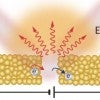
Rice University physicists have discovered a way to trap the world's coldest plasma in a magnetic bottle, a technological achievement that could advance research into clean energy, space weather and astrophysics.
In a twist befitting the strange nature of quantum mechanics, physicists have discovered the Hall effect — a characteristic change in the way electricity is conducted in the presence of a magnetic field — in a nonmagnetic quantum material to which no magnetic field was applied.
Researchers receive funding for up to $1 million to develop a real-time electronic sensor able to detect minute amounts of the airborne virus that causes COVID-19 infection.
An algorithm by Rice University scientists predicts the structures and melting temperatures of collagen, the triple helix that accounts for about a third of the body’s proteins and forms the fibrous glue in skin, bones, muscles, tendons and ligaments.