

On Feb. 17, the SSPEED Center welcomed Jed Anderson, founder and CEO of EnviroAI, for a lecture on environmental AI permitting.
On Feb. 17, the SSPEED Center welcomed Jed Anderson, founder and CEO of EnviroAI, for a lecture on environmental AI permitting.
Rice and Lehigh partner with global industry leaders to revolutionize catastrophe modeling
The Consortium for Enhancing Resilience and Catastrophe Modeling (CERCat) convened at Rice Feb. 5-6 for its semiannual meeting.
New Rice-led perspective charts path to next-generation water and energy membranes
A new invited perspective in Nature Water, led by Rice researchers and international collaborators, discusses the future of membrane science.

A coast, a calling and the search for common ground
A new documentary tells two interwoven stories: the evolution of environmentalism in the United States and the evolution of Jim Blackburn, whose career has unfolded alongside the rise of environmental law.
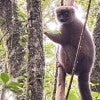
Strawberry guava prevents natural forest generation in Madagascar
Rice researchers find that strawberry guava, an invasive plant, can prevent natural forest generation in areas of Madagascar's Ranomafana National Rainforest, even decades after deforestation has ended.
Explore the role of advanced computing and AI in the energy sector Feb. 24-26
The Ken Kennedy Institute will host the 19th annual Energy HPC & AI Conference Feb. 24-26 at the BioScience Research Collaborative.

Sustainability office introduces eco-friendly commute challenge
Rice’s Office of Sustainability has launched its “New Year, New Commute” challenge, running through Feb. 16 exclusively for Rice staff and faculty. The goal is to encourage Owls to explore and track sustainable and smart commuting options using the ConnectSmart app, helping the university meet its sustainability goals while making daily travel more efficient and rewarding.

She came to Rice to run. She stayed to ask bigger questions
Johanna Bangala learned early what it meant for effort to yield results, a lesson that has carried her across continents and disciplines, from elite track competitions to environmental engineering research at Rice.
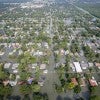
A new paper published in Proceedings of the National Academy of Sciences argues that trustworthiness of climate-risk scores depends not just on the sophistication of the models used to produce the scores but also on whether the science behind them is open, reusable and transparent enough for others to examine, test and improve.

As global leaders gathered at the World Economic Forum Annual Meeting in Davos, Rice President Reginald DesRoches used a one-on-one interview with Bloomberg Media to make the case for research universities as essential drivers of economic growth, innovation and societal impact.
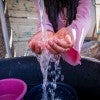
Researchers reinventing household water and sanitation one modular system at a time
Researchers at Rice’s WaTER Institute are leading an ambitious new effort to transform the way the world manages water and sanitation at the household scale.

Rice's Susanne M. Glasscock School of Continuing Studies held a kickoff event for a professional education course this month aimed at strengthening oral language development in young children, bringing together educators, literacy leaders and community partners from across the Houston region.

Rice researchers awarded Hill Prize in Engineering for light-driven ammonia synthesis
Rice’s Naomi Halas, Peter Nordlander and Hossein Robajatzi have been awarded the 2026 Hill Prize in Engineering for their work advancing light-driven technologies for sustainable ammonia synthesis.

Rice will play a central role at the World Economic Forum Annual Meeting in Davos, Switzerland, anchoring signature Bloomberg House programming that spotlights how research universities, cities and states are translating innovation, talent and investment into durable social and economic returns.
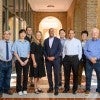
Doubling down on reliability, risk and resilience from disasters
Rice’s civil and environmental engineering department has established a national reputation for tackling one of society’s most pressing challenges: enhancing our understanding of and mitigating the risks posed by natural hazards to our communities and infrastructure.