
Scenic Galveston and the Severe Storm Prediction, Education and Evacuation from Disasters (SSPEED) Center at Rice University are launching two major initiatives designed to bolster wetland health and improve storm resilience across the Houston-Galveston region.
Supported by Valero, the initiatives address two challenges: restoring crucial coastal wetlands and strengthening flood protection for the Texas City area.
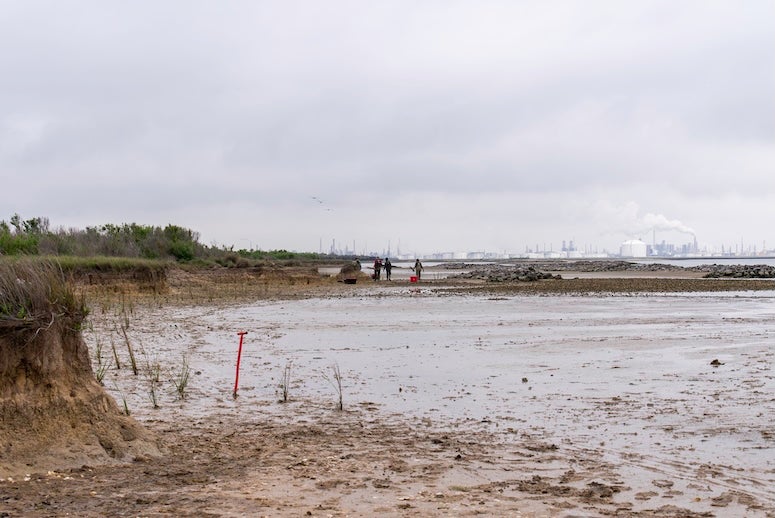
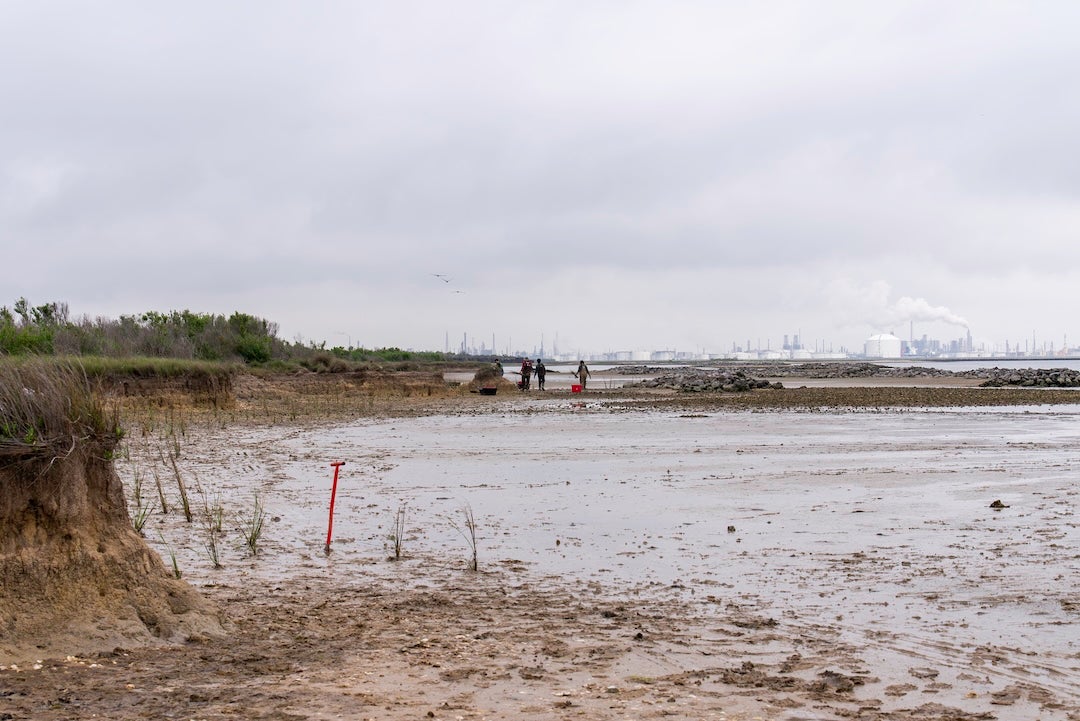
The first initiative will establish a dedicated wetland nursery constructed by Scenic Galveston on or adjacent to its property at Virginia Point near Texas City. For more than 30 years, Scenic Galveston has led coastal land protection and even built a 2-mile long living shoreline, in conjunction with Texas General Land Office, National Fish and Wildlife Foundation and other partners, to protect the property from erosion.
In spring 2025, Scenic Galveston and the SSPEED Center began evaluating the expansion of a living shoreline further east on Scenic Galveston property. Given the major wetland expansion project underway in the nearby Swan Lake area, plus Scenic Galveston’s GLO/CEPRA project in the O’Quinn I-45 Corridor fronting Jones Bay and its ongoing planting along Virginia Point, the need for a reliable source of Spartina alterniflora, a key wetland grass used in restoration, was identified.
“We are excited about crafting our own wetland nursery using site-harvested plant stock for local transplant use to streamline the project,” said Lalise Mason, coastal landscape designer and leader of Scenic Galveston. “With regional partners, including the new GLO-led NRDA effort in adjacent Swan Lake, we have about 600-plus acres of wetland restoration in the works, enhancing both coastal protection and our coastal fishery. We need plants and volunteers.”
Recognizing this critical regional gap, Valero supported an initial grant to Scenic Galveston to design and begin constructing the new wetland nursery just off Highway 197, southwest of the Valero Texas City Refinery. The project includes a full propagation and maturation plan for growing and developing plants (like marsh grasses or other coastal species) to support large-scale coastal restoration.
The second initiative establishes a Valero-funded matching grant program to support SSPEED Center research on flood protection for Texas City. SSPEED modeling results indicate that major hurricanes could overtop the west end of Galveston Island, creating potential surge impacts to Texas City. The grant will fund the development and evaluation of protective measures, including options to extend the existing levee system westward.
“The goal of the research grant is to determine whether solutions identified by SSPEED Center can provide effective, cost-efficient and environmentally responsible flood mitigation for the community,” said Jim Blackburn, co-director of the SSPEED Center. “We are committed to developing nature-based solutions as well as larger structural solutions that protect our region.”
The Texas City flood-protection study continues SSPEED’s ongoing collaborations with the U.S. Army Corps of Engineers, the Texas General Land Office, the Gulf Coast Protection District and Texas A&M University to address surge and rainfall flooding across the Houston-Galveston area.
Together, these two projects represent a coordinated investment in the natural and structural systems that protect one of the nation’s most important coastal, industrial and residential regions. The projects highlight Valero’s commitment to the community, and Valero is proud to work with Scenic Galveston and the SSPEED Center.