
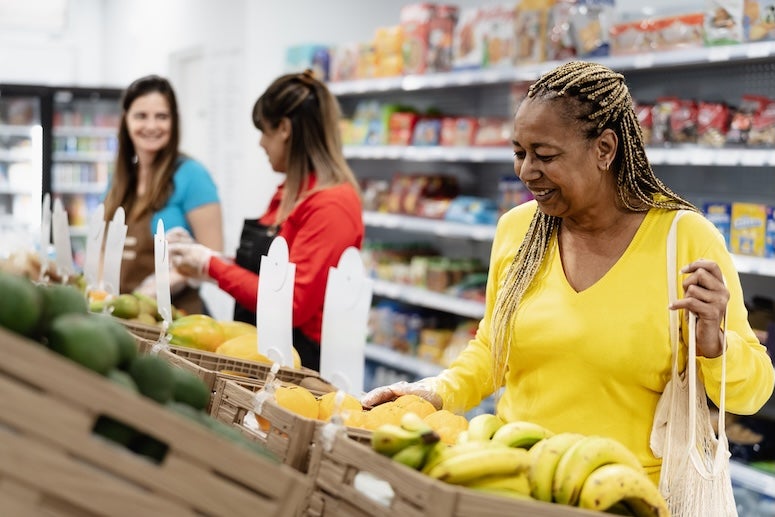
As Supplemental Nutrition Assistance Program (SNAP) cuts and the government shutdown threaten safety nets, Rice University’s Kinder Institute for Urban Research warns that Houston’s hunger crisis — and its health consequences — could grow worse.
Access to healthy, affordable food remains a challenge for many Houston families. A Rice University study explores how food insecurity and health are interconnected.

Nearly 2 in 5 Houston-area households lack reliable access to sufficient and nutritious food, and it’s showing up in their health, according to a new report from the institute.
The research finds that Houston-area families experiencing food insecurity are more than twice as likely to report poor or fair physical health compared with those who are food secure. They also face higher rates of chronic illnesses and greater barriers to medical care.
“Food insecurity doesn’t happen in isolation — it’s tightly linked to health, well-being and access to care,” said Luz Garcini, director of the institute’s Center for Community and Public Health and associate professor of psychological sciences. “When people are forced to choose between food and medical care, it takes a toll on their health and their futures.”
Based on responses from more than 5,200 residents across Houston and Harris County, the study paints a clear picture of how inadequate food access and health intersect. Nearly two-thirds of residents living in food-insecure households reported having at least one chronic condition, with women more likely than men to experience cardiovascular, metabolic or respiratory illnesses.
Most uninsured residents living in food-insecure households earn less than $35,000 a year, and the majority are Hispanic. Many also reported delaying or skipping medical care because of cost or lack of coverage.

The findings come as multiple economic pressures converge on Texas families. New reductions to SNAP benefits took effect Nov. 1, leaving many households with roughly half of their usual monthly allotment amid the ongoing government shutdown. And the timeline for distributing those benefits remains uncertain — it could take weeks or even months before families see the funds hit their cards. In the meantime, local food banks are bracing for increased demand as families struggle to fill the gap.
At the same time, premiums for Affordable Care Act health plans are rising in Texas as insurers brace for the rollback of federal subsidies.
Together, these changes are expected to hit low-income households hardest, including children, veterans and many Hispanic families already facing high rates of food insecurity.
Advocates warn that as benefits shrink and costs rise, families will face difficult trade-offs — paying bills or buying groceries, filling prescriptions or filling plates.
That’s why Garcini and her team say the issue can’t be tackled by food banks or clinics alone.
“We can’t treat hunger and health as separate issues,” she said. “When food banks, community agencies, health providers and researchers work together, we create pathways to wellness that strengthen communities.”
The Kinder Institute is already working with the Houston Food Bank and LIFE Houston to help mothers, infants and low-income families access nutritious food and preventive care. The research team is also studying what leads to food insecurity — including economic trade-offs and access barriers — to inform programs such as the Houston Food Bank’s Food Rx initiative.
As federal support wanes, Garcini’s team says local research and community partnerships will be critical to protect the health and well-being of families.
“If we want people to thrive, we have to make sure they have both the food and the care they need,” she said. “The well-being of our city depends on it.”
The study was conducted by Garcini, Sejal Mistry, Hannah Ballard, Anjelica Martinez, Kathryn Gonzalez and Katherine Perez at the Kinder Institute
To read the full report, visit The Urban Edge.
To schedule an interview with one of the researchers, contact Kat Cosley Trigg at kat.cosley.trigg@rice.edu.