
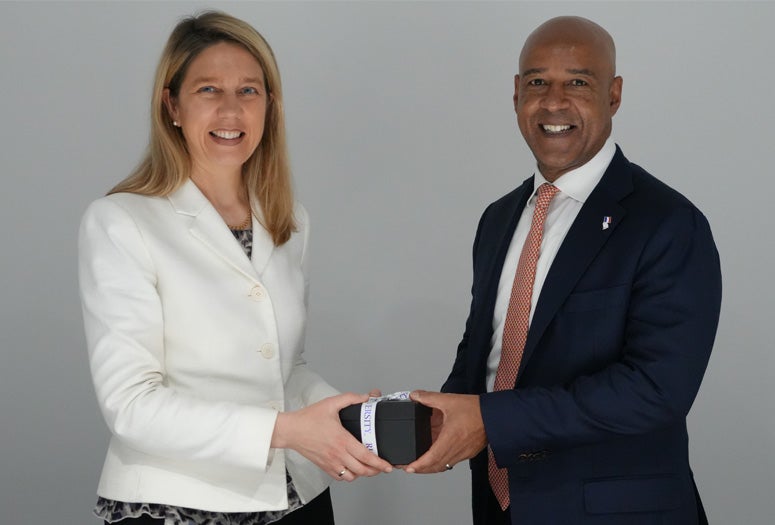
Rice University’s recent agreements with Université Paris Sciences & Lettres (PSL) and the Paris Brain Institute (PBI) mark a defining moment in the institution’s global trajectory. Within the span of two days, Rice established both an articulated undergraduate degree pathway with one of Europe’s premier research universities and a research partnership with one of the world’s leading neuroscience centers. Together, they represent more than two signatures in Paris; they signal Rice’s movement from participating in global academia to shaping it.
The foundation for this moment was laid in 2022 with the opening of the Rice Global Paris Center. The university envisioned the center as a platform for undergraduate study opportunities, a catalyst for research collaborations and a way to raise Rice’s visibility in Europe and beyond. Three years later, the numbers speak clearly: Roughly 200 Rice students participate in Paris-based programs annually, and the center has hosted over 50 research seminars, academic conferences and internationally attended workshops that have convened close to 2,000 researchers. What began as an ambitious foothold in Europe has grown into a multipurpose engine for academic innovation and research acceleration.
“Rice’s engagement in Paris now reflects the maturity of our global strategy,” President Reginald DesRoches said. “These partnerships strengthen our research enterprise, expand opportunities for our students and position Rice to contribute meaningfully to the future of global higher education.”
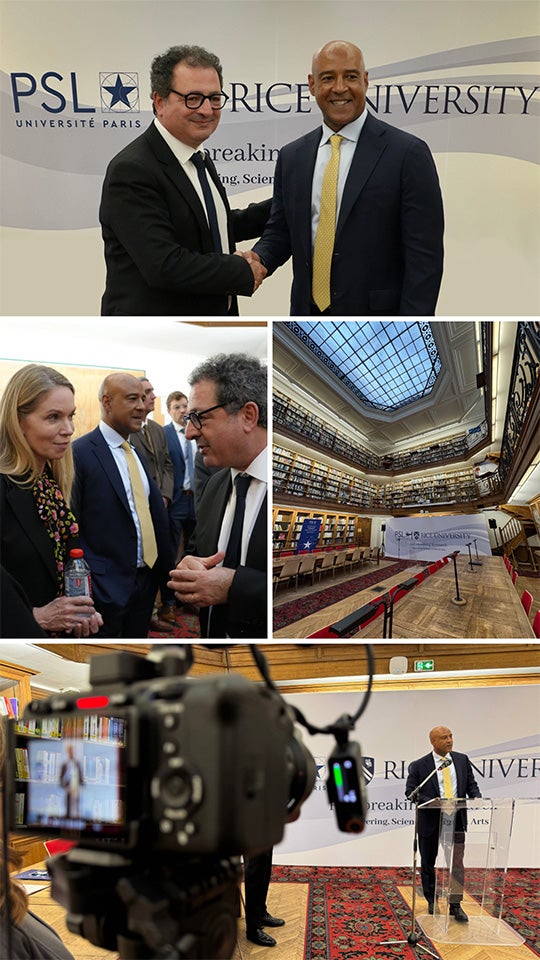
The articulated degree program with PSL builds directly on the strategic research partnership signed in May 2024. Through the new International Scholars and Articulated Degrees Program, Rice undergraduates will have the opportunity to pursue preapproved coursework at PSL’s Paris and Sophia Antipolis campuses while remaining on track for their Rice degrees. PSL students will be able to complete Rice coursework aligned with their major pathways and may apply to finish a Rice degree.
The program’s centerpiece is a shared academic track in environmental sciences that connects PSL’s new International Bachelor of Environmentally Engaged Engineering (I-BE³) with related majors at Rice. The coordinated curriculum allows students to move between institutions without losing academic continuity and opens the door for qualified Rice students to pursue the I-BE³ degree.
“This initiative demonstrates our commitment to expanding the academic landscape for our students while building enduring partnerships with the world’s best academic institutions,” said Caroline Levander, vice president for global strategy. “It reinforces Rice’s responsibility to help shape a world where discovery, innovation and education cross borders.”
After the agreement was signed in PSL’s historic Mines Paris library, the Rice delegation hosted a small reception and dinner at the Club de la Chasse et de la Nature to celebrate the partnership. The moment underscored the significance — symbolic and strategic — of Rice aligning so deeply with an institution at the forefront of global science and scholarship.
The agreement with PBI carries a different kind of weight. While the PSL partnership builds structured academic pathways, the Rice-PBI initiative drives research collaboration at one of the most urgent frontiers in human health. The launch of the Rice Brain Institute earlier this year created a universitywide effort to accelerate discoveries in neuroscience, neuroengineering and brain health. The PBI partnership gives that effort a global dimension.
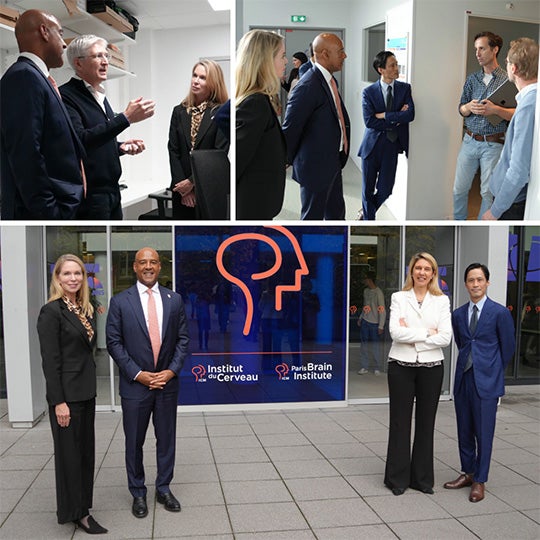
During their visit, DesRoches, Rice associate Paula DesRoches and Levander toured PBI’s facilities with the institute’s leader Brian Lau. The tour, which included laboratories and clinical research spaces inside Pitié-Salpêtrière Hospital, highlighted the scale of PBI’s interdisciplinary ecosystem, home to more than 900 scientists and clinicians.
“This is why we built the Paris Center,” Reginald DesRoches said. “We wanted Rice faculty and students to connect with world-leading researchers in ways that spark new ideas and expand what’s possible. The Rice-PBI partnership shows how a university can transform its global presence from episodic engagement to sustained collaboration.”
The agreement outlines a framework for Rice and PBI to identify shared research priorities in neuroscience and brain health and to build long-term pathways that link fundamental discovery with innovation. The partnership also aligns with Rice’s broader momentum in global research. This fall, Rice rose nine spots to No. 103 globally in the Times Higher Education World University Rankings, placing the university in the 96th percentile among more than 3,100 institutions evaluated worldwide. Its strong scores in teaching, research quality and research environment reflect the growth of a research enterprise increasingly connected to international partners.
“These partnerships show that Rice is ready to help shape the next phase of global higher education,” Levander said. “We are building networks that give our students deeper international experiences, our faculty stronger research collaborations and our university a more visible role in addressing the challenges that define our time.”
Together, the PSL and PBI agreements offer Rice a cohesive strategy for advancing its mission in Europe: build immersive undergraduate pathways, deepen research partnerships and position Rice as a driving force in solving global problems. They also affirm that the university’s investment in the Paris Center has created opportunities abroad as well as an international platform that strengthens Rice at home.