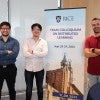
Rice hosted the Texas Colloquium on Distributed Learning, a two-day summit of talks on distributed computing and large-scale machine learning held at the new Ralph S. O’Connor Building for Engineering and Science.
America’s farmers rely on a host of practices such as cover cropping and crop rotation to maintain soil health, grow more productive crops and feed the U.S. and countries around the world. However, current research is too sparse to precisely demonstrate how these practices can actually affect the yields and bottom line for farmers.
A rapid, high-heat electrothermal soil remediation process developed by Rice scientists and collaborators at the United States Army Engineer Research and Development Center flushes out both organic pollutants and heavy metals in seconds without damaging soil fertility.
Rice University welcomed Brett Seidle, deputy assistant secretary of the Navy for research, development, test and engineering, on a campus visit Oct.13.
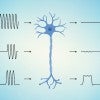
Rice neuroengineers designed the first self-rectifying magnetoelectric material and showed it can not only precisely stimulate neurons remotely but also reconnect a broken sciatic nerve in a rat model.
A new National Science Foundation-funded study by Rice University will examine whether design strategies aimed at improving civic engagement in stormwater infrastructure could help reduce catastrophic flooding.
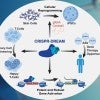
Rice bioengineers developed a tool that activates silent or insufficiently expressed genes using human-derived building blocks and a CRISPR-based genome-targeting platform.
Rice undergraduate engineering students Thomas Kutcher and Rafe Neathery designed a robotic device that enables people with limited mobility to stay hydrated without caretaker help.
An interdisciplinary team of Rice University scientists has won a $1.9 million National Science Foundation grant for research on materials that could serve as the basis for next-generation energy-efficient computing devices.
Rice bioengineers Jerzy Szablowski and Julea Vlassakis received the NIH Director’s New Innovator Award for their respective research projects. Szablowski’s work seeks to develop a noninvasive method of mapping gene expression, while Vlassakis is studying complex, single-cell level processes and interactions in pediatric bone cancer.
Rice computer scientists have won two grants from the National Science Foundation to explore new information processing technologies and applications that combine co-designed hardware and software to allow for more effective and efficient data stream analysis using pattern matching.
A battery recycling process developed by Rice scientists can retrieve valuable metals from mixed cathode and anode waste with a yield exceeding 98% in less time than normal using low-concentration acid, reducing both the cost and negative environmental impact.
A five-year, $3.9 million grant from the National Institutes of Health will help establish a joint Baylor College of Medicine/Rice University center to support the development and testing of new genome editing technologies.
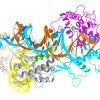
Rice scientists mapped out the three-dimensional structure of one of the smallest known CRISPR-Cas13 systems then used that knowledge to modify its structure and improve its accuracy.