



Rice University joins consortium to improve medical device design
The effectiveness of medical devices comes down to one simple question: Is it usable?
Heart nanofibers in STAT Madness semifinals
Texas Heart Institute and Rice University’s heart-saving nanotube fibers have advanced to the semifinal round of STAT Madness.

Coral tells own tale about El Niño’s past
Researchers from Rice and Georgia Tech studied ancient Pacific corals to improve computer model predictions of El Niño events.

Rice professors named AIMBE fellows
Two Rice University faculty members have been named to the College of Fellows of the American Institute for Medical and Biological Engineering.
Heart nanofibers in STAT Madness quarterfinals
Texas Heart Institute and Rice University’s heart-saving nanotube fibers have advanced to the quarterfinal round of STAT Madness.
Bioengineers call for scale-up of COVID-19 testing to academic labs
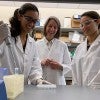
Rice bioengineers are calling on federal officials to draft their lab and thousands like it to rapidly scale up coronavirus testing.
Heart nanofiber project makes STAT Madness round 3
A Texas Heart Institute/Rice project to use nanotube fibers to repair damaged hearts advances to round 3 of STAT Madness.
New nano strategy fights superbugs
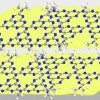
Rice researchers imprint carbon nitride nanosheets to catch and kill free-floating antibiotic resistant genes found in secondary effluent produced by wastewater treatment plants. The strategy would prevent the DNA molecules from making downstream bacteria more resistant to drugs.
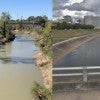
Natural bayou better when floods threaten Houston
A comparison of flood plains around Houston’s two major bayous shows the natural Buffalo Bayou is far better at managing floodwaters than the channelized Brays Bayou.
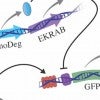
Strong signals show how proteins come and go
Rice University bioscientists develop a versatile gene signal amplifier that can not only do a better job of detecting the expression of chromosomal genes than current methods but can potentially be used to detect any cellular gene.
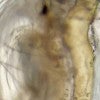
Tissue-digging nanodrills do just enough damage
Scientists at Rice and their collaborators show light-activated molecular drills effectively kill cells in whole eukaryotic organisms.
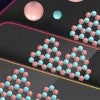
A small step for atoms, a giant leap for microelectronics
Rice materials scientist Boris Yakobson and colleagues in Taiwan and China report in Nature on making large single-crystal sheets of hexagonal boron nitride, touted as a key insulator in future two-dimensional electronics.
‘Smart water’ may aid oil recovery
Rice University engineers study the mechanism that would allow “smart water" to aid oil recovery from reservoirs.