
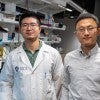
Reactor developed at Rice could make direct air capture more energy efficient
Rice researchers have developed an electrochemical reactor that has the potential to drastically reduce energy consumption and cost for direct air capture.
Reactor developed at Rice could make direct air capture more energy efficient
Rice researchers have developed an electrochemical reactor that has the potential to drastically reduce energy consumption and cost for direct air capture.

‘Pac-Man effect’ offers precise control for advanced materials design
Rice researchers show that exposing superparamagnetic colloids to a rotating magnetic field that reverses direction after each revolution generates a “Pac-Man effect” due to magnetic relaxation.
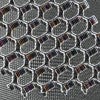
New synthesis strategy could speed up PFAS decontamination
Rice engineers have developed an innovative way to make covalent organic frameworks, special materials that can be used to trap gases, filter water and speed up chemical reactions.
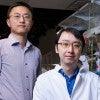
Rice-built reactor yields green ammonia and purified water
Rice engineers have developed a revolutionary reactor design that could decarbonize ammonia production while also mitigating water pollution.
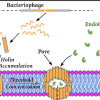
Rice researchers unveil secrets behind viral precision
New research from Rice scientists is shedding light on how viruses ensure their survival by precisely timing the release of new viruses.

Japanese migrants’ experiences in Texas celebrated in award-winning exhibit
Completed in time to celebrate Asian American and Pacific Islander Month in May 2023, Fondren Fellows project “History of Japanese Farmers in Texas” recently won the 2024 Texas Digital Library’s Trailblazer Award.

A number of Rice graduate programs are rated among the nation’s best in the latest edition of U.S. News and World Report’s “Best Graduate Schools” rankings.

Rice lab achieves major gains in perovskite solar cell stability
Rice lab develops new chemistry to achieve commercially relevant stability and performance for perovskite solar cells.

Researchers at Rice University have successfully synthesized a group of natural compounds known as fusicoccanes. The molecules, found in various living organisms, exhibit diverse biological activities, including the ability to modulate protein-protein interactions within biological systems.

Engineering professor Zygourakis celebrated for 44 years at Rice
Kyriacos Zygourakis, the A.J. Hartsook Professor of Chemical and Biomolecular Engineering at Rice, celebrated his retirement after 44 years at Rice.

Faculty, staff, students honored for excellence in teaching, mentoring, service
Each year, Rice honors members of the university community who have served students through outstanding teaching, dedication and service.

Rice alumna wins prestigious merit-based fellowship for new Americans
Rice University alumna Minjung Kim is one of 30 recipients of the Paul & Daisy Soros Fellowships for New Americans, a merit-based graduate school program for immigrants and children of immigrants.

Rice to offer new master’s in energy transition and sustainability
Rice University will launch a Master of Energy Transition and Sustainability (METS) program this fall designed to equip students with the tools needed to thrive in the evolving energy industry landscape.

Science and spirituality: Moody Fellow blends majors for holistic approach to health care
Now a junior at Rice on a pre-med track, Siddhant Patil has been busy double majoring in kinesiology and religion.

Rice research unveils key dynamics of 2D nanomaterials with view to larger-scale production
A team of Rice researchers mapped out how flecks of 2D materials move in liquid ⎯ knowledge that could help scientists assemble macroscopic-scale materials with the same useful properties as their 2D counterparts.