

Pasquali named fellow of The Society of Rheology
Rice’s Matteo Pasquali has been elected a fellow of The Society of Rheology (SoR).
Pasquali named fellow of The Society of Rheology
Rice’s Matteo Pasquali has been elected a fellow of The Society of Rheology (SoR).

Machine learning powers new approach to detecting soil contaminants
A team of researchers at Rice and Baylor College of Medicine has developed a new strategy for identifying hazardous pollutants in soil ⎯ even ones that have never been isolated or studied in a lab.

New roadmap advances catalytic solutions to destroy ‘forever chemicals’
A team of researchers from Rice, Carnegie Mellon University and other leading global institutions has outlined a bold new roadmap for harnessing heterogeneous catalysis to destroy per- and polyfluoroalkyl substances (PFAS), the so-called “forever chemicals” that have contaminated water supplies worldwide.

Menachem Elimelech was honored with the Sidney Loeb Award at the European Desalination Society Conference held in Porto, Portugal, April 28.

Graduate Student Spotlight: Thiago Pinheiro dos Santos ’25
For Thiago Pinheiro dos Santos, a doctoral candidate in chemical and biomolecular engineering from Brazil, research is a way to drive positive, meaningful impact across a wide range of real-world domains from energy innovation to medicine.
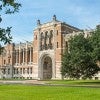
Rice graduate programs excel in US News rankings
Rice continues to stand out for its academic excellence with several graduate programs earning high marks in the latest edition of U.S. News & World Report’s “Best Graduate Schools” rankings.

Rice chemical engineering helping to power the energy transition
Rice professors Aditya Mohite and Haotian Wang presented their research and entrepreneurial work at CERAWeek, an annual energy conference in Houston, to industry peers and leaders from around the world the week of March 10.

Rice and UH scientists redefine chemical manufacturing method to solve carbon capture problem
A team of scientists led by Haotian Wang, associate professor in chemical and biomolecular engineering at the George R. Brown School of Engineering and Computing at Rice, and Xiaonan Shan, associate professor of electrical and computer engineering at University of Houston, have discovered simple yet elegant solutions to address a fundamental issue in carbon capture and utilization technology.
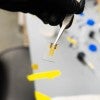
New method developed to dramatically enhance bioelectronic sensors
In a breakthrough that could transform bioelectronic sensing, an interdisciplinary team of researchers at Rice University has developed a new method to dramatically enhance the sensitivity of enzymatic and microbial fuel cells using organic electrochemical transistors (OECTs).

Rice researchers unravel menopause timing, shedding light on ovarian aging and fertility
Led by Rice's Anatoly Kolomeisky, researchers have developed a theoretical framework that quantitatively predicts menopause timing.

In a significant step toward creating a sustainable and circular economy, Rice researchers have published a landmark study demonstrating that carbon nanotube fibers can be fully recycled without any loss in their structure or properties.
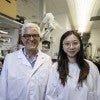
Rice researchers find dialysis ‘astonishingly effective’ for treating wastewater
Researchers at Rice, in collaboration with Guangdong University of Technology, have uncovered an innovative approach to treating high-salinity organic wastewaters.

The Welch Foundation honors Rice’s Wang for pioneering contributions to sustainable energy solutions
The Welch Foundation, one of the nation’s leading private funders of basic chemistry research, has awarded the 2025 Norman Hackerman Award in Chemical Research to Haotian Wang, an associate professor in the Department of Chemical and Biomolecular Engineering at Rice University.
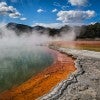
‘Game changer’ in lithium extraction: Researchers develop novel electrochemical reactor
Researchers at Rice have developed an innovative electrochemical reactor to extract lithium from natural brine solutions, offering a promising approach to address the growing demand for lithium used in rechargeable batteries.

WaTER Institute leads the charge in making cleaner water through nanotech
Providing access to safe drinking water can save more lives than doctors