Researchers from Rice University and Baylor College of Medicine have shown that colored light can both activate and deactivate genes of gut bacteria in the intestines of worms. The research shows how optogenetic technology can be used to investigate the health impacts of gut bacteria.
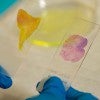
Researchers from Rice University and MD Anderson Cancer Center have created a microscope that uses artificial intelligence to quickly and inexpensively image large tissue sections at high resolution with minimal preparation. If clinically validated, the DeepDOF microscope could allow surgeons to inspect tumor margins within minutes.
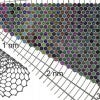
Nanomaterials researchers in Finland, the United States and China have created a color atlas for 466 unique varieties of single-walled carbon nanotubes.
The reduction in mobility along the Texas-Mexico border caused by COVID-19 will hurt the state's economy as a whole, according to new research from Rice University’s Baker Institute for Public Policy.
HOUSTON – (Dec. 9, 2020) – Although people of all faiths report growing religious discrimination during the past few years, the phenomenon is most common among Jews and Muslims, according to a new study from researchers at Rice University and West Virginia University (WVU). In addition, Jews and Muslims are much more likely to become victims of violence because of their religious beliefs.
Vaccine-related legislation should be promoted as nonpartisan, new research suggests, and most Texas lawmakers agree despite a vocal anti-vaccine movement.
The United States government should accept greater strategic risk to “hold the line” against the revisionist measures of the Chinese government, according to new research from Rice University’s Baker Institute for Public Policy.
Rice University’s Jones Graduate School of Business placed in the top 10 of five categories in The Princeton Review's latest rankings of the Best Business Schools for 2021, including the No. 6 spot for its newest program, MBA@Rice.
Inspired by light-sensing bacteria that thrive near hot oceanic vents, synthetic chemists use vitamin B12 to catalyze valuable hydrocarbons known as olefins, or alkenes, useful precursor molecules for the manufacture of drugs and agrochemicals.