Inequities in marijuana policy persist because of a failure to center reform around racial justice, according to a new report by experts at Rice's Baker Institute for Public Policy in the American Bar Association publication The Judges’ Journal.
Kirsten Siebach, a Martian geologist at Rice University, is available to speak with the media before NASA’s next Mars rover, Perseverance, lands on Feb. 18.
Members of Rice's Department of Chemistry put forth a video “choose-your-own-adventure” strategy to help undergraduate students conduct virtual experiments.
The United States must focus on improving infrastructure as it recovers from the COVID-19 pandemic, and the top priorities include increasing broadband access, expanding public transportation, and improving emergency response and health care facilities, according to a new survey and report from Rice's Kinder Institute for Urban Research.
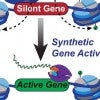
Rice bioengineers harness the CRISPR/Cas9 system to program histones, the support proteins that wrap up and control human DNA, to manipulate gene activation and phosphorylation. The new technology enables innovative ways to find and manipulate genes and pathways responsible for diseases.
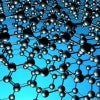
Nanotechnology can deliver solutions to U.S. economic, energy and geopolitical challenges while also helping the world meet climate targets and sustainability goals, according to a new report from Rice University's Baker Institute for Public Policy.
Increasing the number of refugees resettled to the U.S. is critical for the well-being of refugees across the globe, according to an expert from Rice’s Baker Institute for Public Policy.
Rice University and its Center for African and African American Studies (CAAAS) have partnered with the University of Houston, Texas Southern University and Prairie View A&M University to form a new collaboration committed to African and African American Studies scholarship.
The Centers for Disease Control and Prevention has received limited data on the spread of COVID-19 in the U.S. despite providing detailed case report forms, according to a new research paper from Rice's Baker Institute for Public Policy.
HOUSTON – (Feb. 1, 2021) – With the average adult spending about half of their waking hours at work, employees and companies alike are recognizing the importance of investing in more productive, diverse and satisfying workplaces.
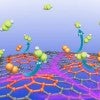
Rice University engineers have discovered technology that could slash the cost of semiconductor electron sources, key components in devices ranging from night-vision goggles and low-light cameras to electron microscopes and particle accelerators.