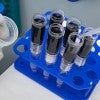

HOUSTON – (Sept. 1, 2020) – The world’s scientific community must engage with a broad range of stakeholders to develop guidelines on embryo and embryoid research, according to a new paper from Rice University’s Baker Institute for Public Policy.
The formation of relationships – everything from business to romantic partnerships – and how they impact the world will be the focus of a new Rice University research project funded by the National Science Foundation (NSF).
OpenStax, Rice’s educational technology initiative, is vastly expanding its library of free textbooks, working toward a goal of ensuring that no student ever has to worry about textbook costs again. This work is possible as a result of new grants totaling $12.5 million from the Bill & Melinda Gates Foundation, the William and Flora Hewlett Foundation, the Charles Koch Foundation and the Stand Together community.
National parks are safe havens for endangered and threatened species, but an analysis by Rice University data scientists finds parks and protected areas can preserve more than species.
If you’re looking for an unconventional approach to doing business, select a CEO with an uncommon name, according to new research co-authored by an expert at Rice University's Jones Graduate School of Business.
Voters with the highest risk of suffering COVID-19’s worst effects say they’re more likely to cast ballots by mail this November, even though many of them aren’t sure how to do it, according to a new survey from Rice University.
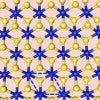
Rice researchers show how thermoelectricity hurdles some defects, but not others, in gold nanowires. The discovery has implications for making better thin-film electronic devices.
Rice faculty members Scott Solomon and Kirsten Sieback appear in the first episode of "Life 2.0," a new television series that's available for streaming and slated to debut on the air this weekend.